
What Are Potholes?
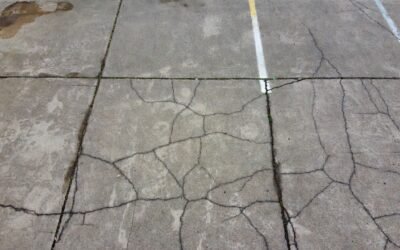
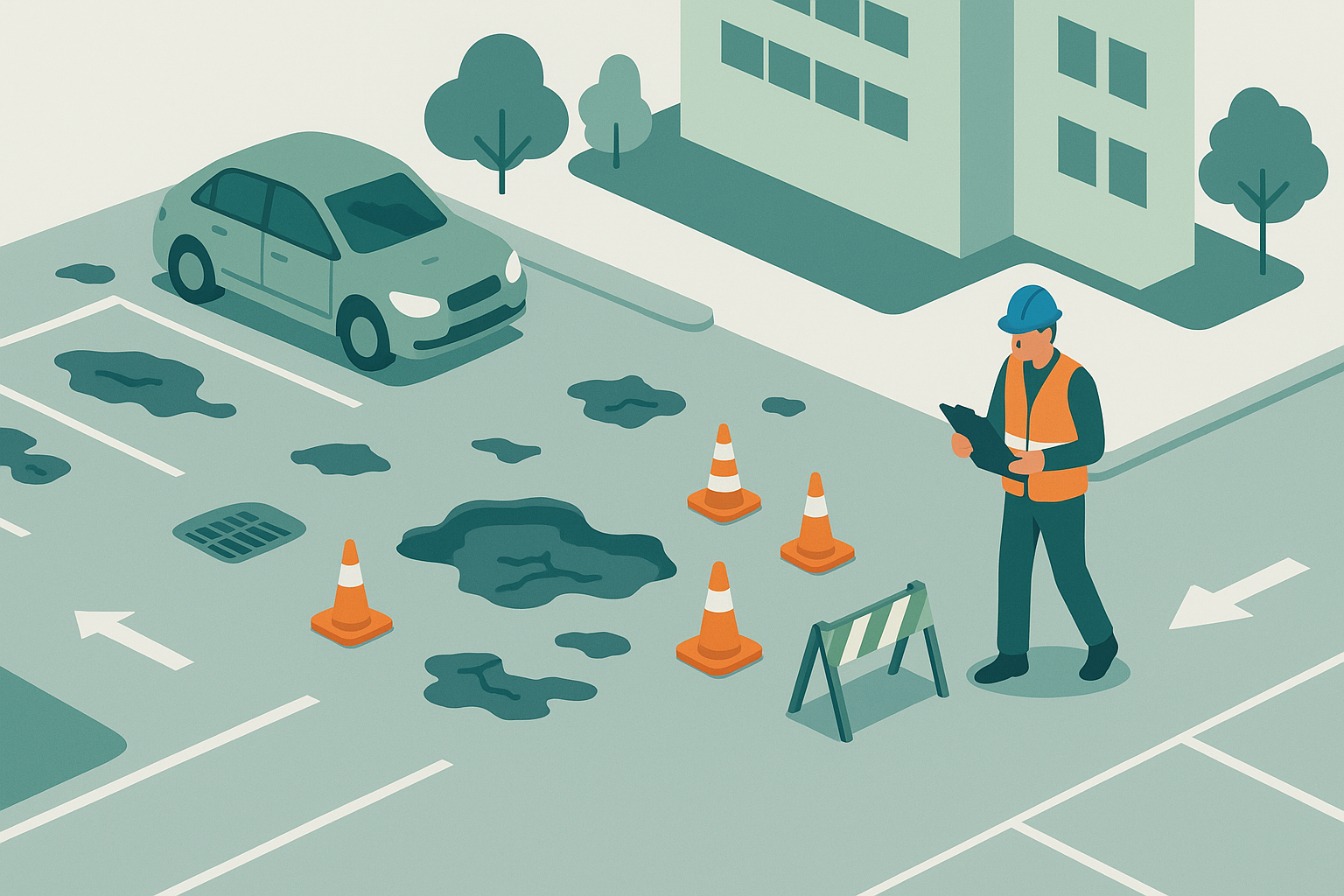
Potholes are depressions or cavities that form on asphalt or concrete surfaces due to the deterioration of the material. They typically begin as small cracks or defects that expand over time. Potholes can range in size from minor nuisances to large craters capable of causing significant damage.
Table of Contents
How Potholes Form Over Time
Potholes form when water seeps into small cracks in the pavement and is subjected to repeated freeze-thaw cycles. As water freezes, it expands, enlarging the cracks. When vehicles drive over these weakened areas, the pressure causes further breakdown, eventually leading to the formation of potholes. Poor drainage and heavy traffic can accelerate this process.
Why Parking Lots Are Vulnerable to Potholes
Parking lots are especially prone to potholes because they endure consistent vehicle traffic, exposure to the elements, and occasional neglect. Without proper maintenance, cracks can form and expand, making parking lots a hotspot for pothole development. Poor drainage systems and fluctuating temperatures further exacerbate the issue.
Safety Risks Posed by Potholes

A close-up of a damaged asphalt road with potholes filled with rainwater, illustrating the importance of urban infrastructure repairs.
Vehicle Damage and Repair Costs
Potholes can cause serious damage to vehicles, including tire punctures, misaligned suspensions, and bent rims. These repairs can be costly and inconvenient for vehicle owners. For businesses, such damage can tarnish their reputation and deter customers from returning.
Example: Tire and Suspension Damage
Driving over potholes can lead to flat tires or suspension issues, which are among the most common and expensive repairs resulting from these hazards.
Pedestrian Safety Risks
Potholes pose a significant safety risk for pedestrians. Tripping on uneven surfaces or stepping into potholes can result in sprains, fractures, or other injuries. For businesses, such incidents can lead to liability claims and damage to their reputation.
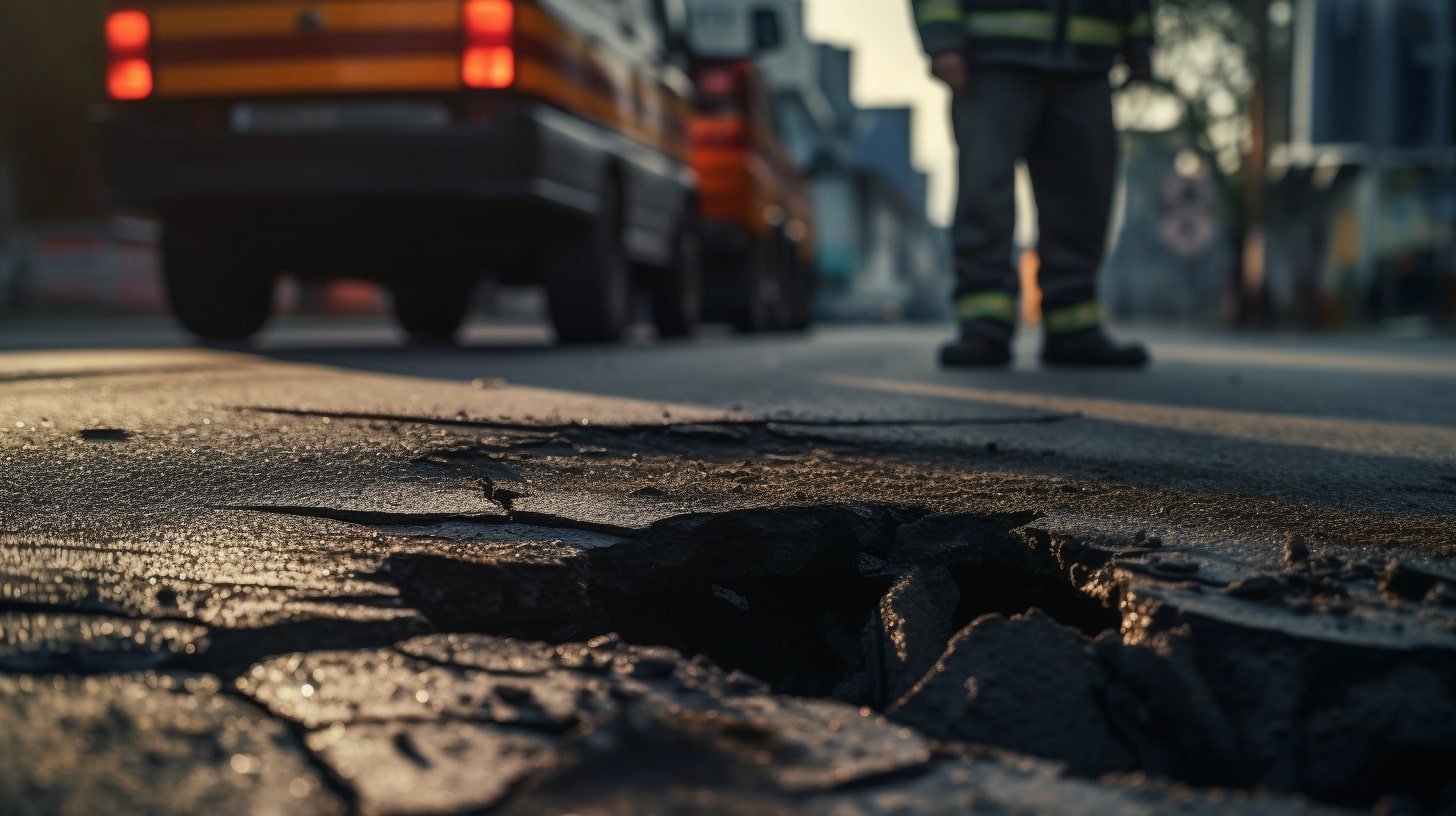
Urban road repair process with worker and heavy machinery, addressing pavement cracks and safety.
Increased Liability for Parking Lot Owners
Parking lot owners have a legal obligation to maintain safe conditions. Neglecting pothole repairs can lead to lawsuits, higher insurance premiums, and costly settlements. Ensuring timely repairs not only mitigates safety risks but also protects businesses from legal and financial repercussions.
Factors That Accelerate Pothole Formation
Weather Conditions (Freeze-Thaw Cycles)
Weather conditions play a critical role in pothole formation. During freeze-thaw cycles, water seeps into small cracks in the pavement. When the temperature drops, the water freezes and expands, creating pressure that enlarges the cracks. As temperatures rise, the ice melts, and the process repeats, further weakening the pavement structure.
Heavy Traffic and Vehicle Weight
Consistent exposure to heavy vehicles, such as delivery trucks or SUVs, significantly accelerates pothole development. The pressure exerted by these vehicles exacerbates existing cracks, causing them to deepen and eventually form potholes. Parking lots with high traffic volumes are particularly susceptible to this issue.
Poor Drainage Systems in Parking Lots
Inadequate drainage systems in parking lots can lead to water pooling on the surface. Standing water increases the risk of cracks and accelerates the erosion of the pavement’s foundation. Over time, this excess moisture weakens the structural integrity of the lot, creating ideal conditions for pothole formation.
Identifying Potholes Before They Worsen
Signs of Early Pothole Formation
Early signs of pothole formation include visible cracks, small depressions, and uneven surfaces on the pavement. These indicators suggest that the asphalt or concrete is beginning to weaken, making it essential to address these issues promptly to prevent further deterioration.
Importance of Regular Parking Lot Inspections
Routine inspections are critical for identifying and addressing potential pothole problems before they escalate. Inspections should focus on spotting cracks, pooling water, and signs of wear, which are often precursors to pothole formation. A well-scheduled inspection plan can save time and money by enabling timely maintenance.
How to Prioritize Repairs Based on Severity
To effectively manage repairs, assess the severity of each pothole or crack. High-traffic areas or locations with significant damage should be prioritized to minimize safety risks. Implementing a ranking system for repairs ensures that the most critical issues are addressed first, reducing liability and extending the lifespan of the parking lot.
Effective Solutions for Pothole Repair
Temporary Fixes vs. Permanent Repairs
Temporary fixes, such as cold asphalt patches, provide quick relief but are not long-lasting solutions. These are ideal for emergency repairs to prevent immediate hazards but often require repeated maintenance. Permanent repairs, like full-depth patching or overlaying, offer a more durable solution that addresses the underlying structural issues, ensuring a longer lifespan for the pavement.
Overview of Common Repair Methods
- Asphalt Patching: Suitable for small potholes, this method involves filling the damaged area with asphalt mix. It’s cost-effective but may not be ideal for high-traffic areas.
- Crack Sealing: Focuses on preventing water infiltration by sealing existing cracks. This method is a preventative measure to extend the pavement’s lifespan.
- Infrared Asphalt Repair: Uses infrared technology to heat and blend new asphalt with existing material, creating a seamless repair. This method is durable, eco-friendly, and effective for medium-sized potholes.
| Repair method | Type | Relative cost (1–5) | Relative longevity (1–5) | Typical lifespan (parking lot conditions) |
|---|---|---|---|---|
| Cold asphalt patch | Temporary pothole fill | 1 | 1 | A few months to 1 year, often only through one winter |
| Asphalt patching (hot mix) | Standard sawcut patch | 2 | 3 | Roughly 2 to 5 years |
| Infrared asphalt repair | Semi permanent, blended | 3 | 4 | Roughly 4 to 8 years |
| Full depth patching | Permanent structural repair | 5 | 5 | Roughly 7 to 15 years |
When to Call a Professional Repair Service
Professional repair services are recommended for extensive damage or when temporary fixes are no longer effective. Experts can assess the root causes of potholes and recommend appropriate solutions, ensuring the repairs are durable and cost-efficient. Hiring professionals also saves time and reduces the likelihood of recurring issues.
Preventing Potholes in Your Parking Lot
Proactive Maintenance Strategies
Proactive maintenance is the most effective way to prevent potholes from forming. Regularly inspect your parking lot for early signs of wear, such as cracks or surface degradation, and address these issues immediately. Employ preventive measures like timely crack sealing, debris removal, and routine surface cleaning to ensure the pavement remains intact and functional.
Importance of Proper Drainage
Proper drainage is critical to preventing water from pooling on your parking lot’s surface. Water that collects and seeps into the pavement can weaken its foundation, leading to cracks and potholes. Install or maintain effective drainage systems, such as gutters and sloped surfaces, to channel water away from the parking lot and reduce long-term damage.
Sealcoating to Extend Pavement Life
Sealcoating is an essential step in protecting your parking lot from wear and tear. It adds a protective layer to the pavement, shielding it from moisture, UV rays, and chemical spills. Regular sealcoating not only enhances the appearance of your parking lot but also significantly extends its lifespan by preventing surface damage and delaying the formation of potholes.
Economic Impacts of Neglecting Pothole Repairs
Increased Repair Costs Over Time
Delaying pothole repairs often leads to larger, more costly problems. Minor cracks and small potholes, if ignored, can expand into extensive damage that requires significant investment to fix. Regular maintenance and prompt repairs are more cost-effective than addressing widespread pavement deterioration.
Loss of Customer Trust Due to Unsafe Parking Conditions
Customers value safe and well-maintained parking lots. Potholes create a poor first impression and can discourage visitors from returning. Moreover, businesses risk losing customer loyalty if safety concerns are not addressed, potentially impacting revenue and reputation.
Potential Legal and Insurance Costs
Neglected potholes can result in accidents, leading to legal claims and increased insurance premiums. Businesses may face lawsuits from pedestrians or drivers injured due to unsafe parking conditions. These legal and financial liabilities can be avoided through proactive maintenance and timely repairs.
How to Choose the Right Pothole Repair Service
Qualities of a Reliable Repair Contractor
When selecting a pothole repair contractor, look for professionals with proven experience, appropriate licenses, and strong customer reviews. A reliable contractor should use high-quality materials and modern techniques, ensuring long-lasting results. Additionally, they should provide clear communication and transparent pricing to build trust.
Questions to Ask Before Hiring
- What types of repair methods do you specialize in?
- Can you provide references or examples of previous work?
- What warranties or guarantees do you offer on your repairs?
- How long will the repair process take, and what is the expected lifespan of the fix?
- Do you carry insurance to cover potential damages during the repair process?
Comparing Quotes and Services
When evaluating contractors, request detailed quotes that outline the scope of work, materials, and labour costs. Compare these estimates not only for pricing but also for the quality of services offered. Be cautious of unusually low bids, as they may indicate subpar materials or workmanship. Opt for a contractor who provides the best value and aligns with your maintenance goals.
Conclusion
Recap of the Importance of Addressing Potholes
Potholes are more than just an aesthetic concern—they pose significant safety risks and financial liabilities for parking lot owners. Proactively addressing potholes ensures the safety of both vehicles and pedestrians while preventing costly repairs or legal consequences.
Key Takeaways for Parking Lot Safety and Maintenance
- Regular inspections are crucial for identifying and addressing early signs of pavement damage.
- Prompt repairs save money in the long run and prevent more extensive damage.
- Preventive measures, such as sealcoating and maintaining proper drainage, are essential to extending the lifespan of parking lots.
Encouragement to Take Proactive Steps to Prevent Hazards
Taking action to repair potholes and implement preventive strategies not only protects your investment but also demonstrates care and professionalism to customers and visitors. By staying ahead of potential issues, you can ensure a safe and welcoming environment for all.
FAQs About Pothole Safety and Repairs
What Are the Most Common Causes of Potholes?
Potholes typically form due to water infiltration, freeze-thaw cycles, heavy traffic, and inadequate maintenance. Poor drainage and temperature fluctuations further accelerate the process.
How Often Should Parking Lots Be Inspected for Potholes?
Parking lots should be inspected at least quarterly, or more frequently in areas with heavy traffic or extreme weather conditions. Regular inspections help identify early damage before it worsens.
What Is the Average Cost of Repairing a Pothole?
The cost of repairing a pothole can range from $100 to $1,000, depending on its size and the chosen repair method. Temporary fixes are cheaper but may require more frequent maintenance.
Can Pothole Repairs Be Done in Winter?
Yes, pothole repairs can be done in winter, but they are often temporary fixes. Cold asphalt patches are commonly used for emergency repairs, while permanent solutions are best performed in warmer conditions.
What Are the Legal Risks of Ignoring Pothole Repairs?
Ignoring pothole repairs can lead to legal claims from injuries or vehicle damage. Businesses may face lawsuits, increased insurance premiums, and reputational harm due to unsafe parking lot conditions.