
Why Concrete Expansion Joints Are Critical
Purpose and Function of Concrete Expansion Joints
Concrete expansion joints are designed to absorb the natural expansion and contraction of concrete caused by temperature changes, moisture levels, and environmental factors. Without these joints, concrete slabs would crack or buckle as they expand in the heat or contract in colder conditions. Expansion joints provide necessary flexibility, allowing the concrete to move slightly without compromising the overall structure. This is especially important for large surfaces like sidewalks, driveways, and parking lots where even minor movements can lead to significant damage over time.
Table of Contents
By creating these controlled spaces within the concrete, expansion joints prevent unsightly cracks and ensure that the surface remains structurally sound. They also help maintain the appearance and longevity of the concrete, reducing the need for frequent repairs or replacements.
Consequences of Ignoring Expansion Joint Maintenance
Neglecting the maintenance of concrete expansion joints can lead to several problems. Over time, the filler material within these joints can degrade, shrink, or crack, which reduces its effectiveness. Without proper filling, the concrete loses its ability to expand and contract safely, leading to cracks and surface damage.
Water infiltration is another significant risk. When water enters compromised joints, it can seep underneath the concrete slab, causing erosion and weakening the foundation. This not only threatens the integrity of the surface but can also lead to dangerous conditions such as tripping hazards or, in the worst cases, structural failure. Proper maintenance of expansion joints is essential to prevent these issues and extend the life of your concrete surfaces.
Key Materials and Tools for Joint Filling
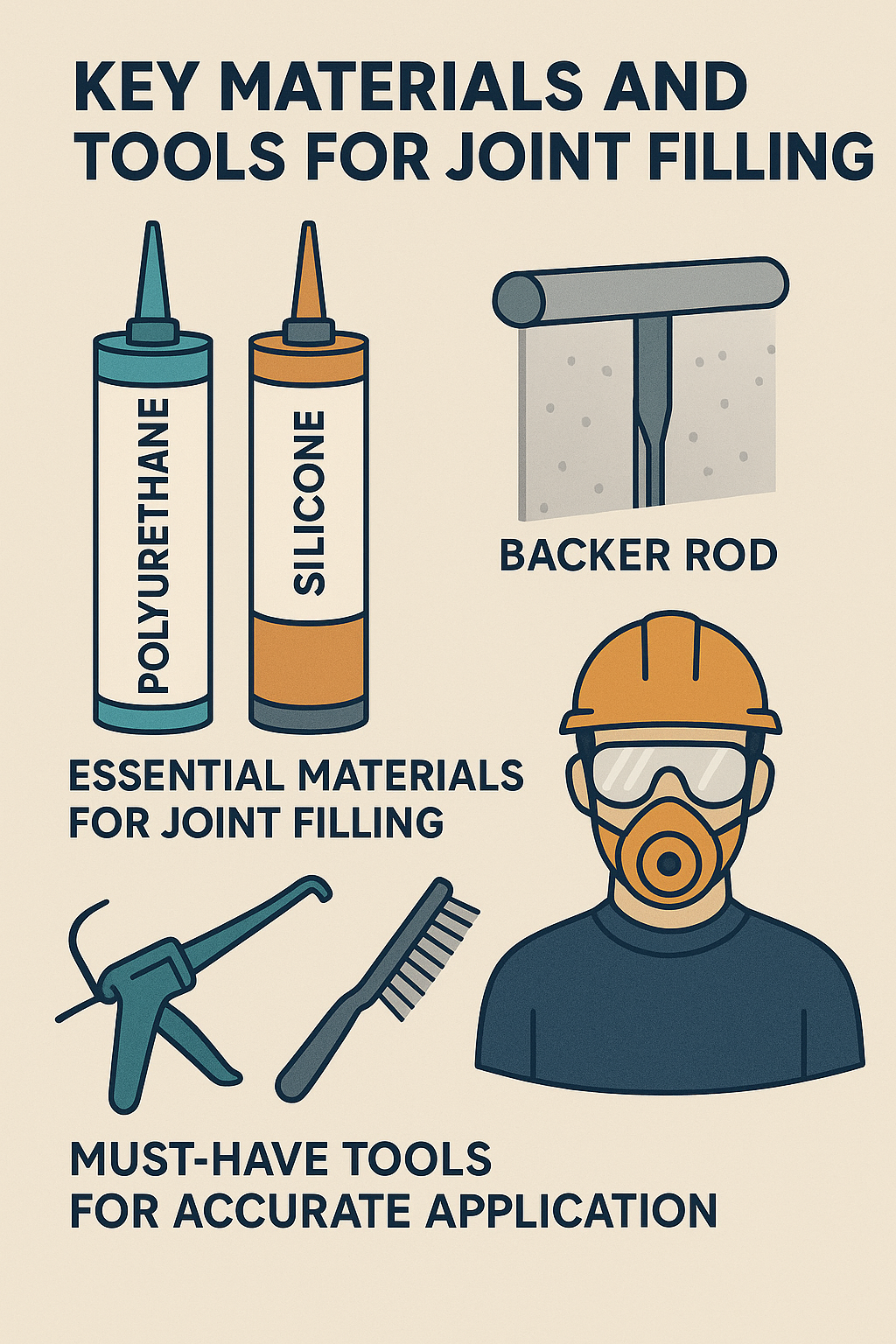
Essential Materials for Joint Filling
To ensure long-lasting and effective concrete expansion joint filling, it’s essential to use the right materials. Two common filler materials are polyurethane and silicone-based sealants, each with specific advantages.
- Polyurethane fillers are highly flexible, making them ideal for surfaces exposed to a wide range of temperatures and movement. They adhere well to concrete and provide excellent water resistance.
- Silicone fillers are known for their durability and elasticity, performing well in extreme temperatures. They are often preferred for joints that require long-lasting flexibility and resistance to weathering.
Another critical component is the backer rod, a flexible foam rod inserted into the joint before the filler. It ensures that the filler remains at the correct depth and helps reduce the amount of filler needed, while also preventing three-sided adhesion (which can cause stress on the filler and lead to cracking). Choosing the right combination of backer rod and filler is crucial to ensure the joints remain effective and durable over time.
Must-Have Tools for Accurate Application
Proper application of expansion joint fillers requires the use of specialized tools to ensure the job is done correctly and efficiently:
- Caulking gun: This tool is essential for applying the filler evenly into the joint. Using a caulking gun allows for precision, ensuring the filler reaches all parts of the joint and providing a smooth, consistent finish.
- Cleaning gear: Before filling, the joint must be thoroughly cleaned. Tools such as wire brushes, compressed air, or power washers help remove debris, old filler, and dirt. This ensures the new filler adheres properly and performs as expected.
- Safety equipment: Protecting yourself is vital when working with fillers, especially those containing chemicals. Wearing gloves, goggles, and a mask helps prevent contact with harmful substances and keeps the work environment safe.
Each of these tools plays a vital role in ensuring that the filler is applied correctly, adheres to the joint properly, and cures to form a durable, long-lasting barrier against water and debris.
Step-by-Step Guide to Filling Expansion Joints
Prepping the Area: Cleaning and Measuring the Joints
Before filling an expansion joint, it’s crucial to properly clean and prepare the area. Start by removing any debris, old filler, and dirt from the joint using a wire brush, compressed air, or a power washer. This ensures that the new filler will adhere properly to the concrete, creating a durable seal.
Next, measure the depth and width of the joint to determine the appropriate amount of filler needed. Expansion joints should be cleaned to a depth of at least half the width of the joint, with a minimum depth of 1/4 inch. If the joint is too deep, insert a backer rod to reduce the amount of filler required, while ensuring the material is properly supported.
Choosing the Right Filler for Your Project
Selecting the right filler material depends on various factors such as weather conditions, the surface type, and whether the joint is indoors or outdoors.
- Weather: If the joint is exposed to significant temperature changes, choose a flexible filler like polyurethane that can withstand expansion and contraction. For areas with constant moisture, silicone fillers may offer superior water resistance.
- Surface type: For concrete slabs subject to frequent traffic or heavy loads (such as driveways or parking lots), you’ll need a highly durable filler that can handle the stress without cracking.
- Indoor vs. outdoor: Indoors, temperature fluctuations and water resistance might be less of an issue, so a more rigid filler could work. Outdoors, flexibility and weather resistance are critical, making polyurethane and silicone better options.
Applying the Filler: Techniques for Durability
Once the joint is clean and you’ve chosen the appropriate filler, it’s time to apply it. If the joint is deeper than necessary, insert a backer rod into the joint. The backer rod ensures that the filler is applied at the correct depth, reducing filler waste and preventing cracks from forming. The rod should be positioned about 1/4 inch below the surface of the joint.
Next, load the chosen filler into a caulking gun. Starting at one end of the joint, apply the filler slowly and evenly, ensuring that it completely fills the gap. Use a consistent, steady pressure to avoid air bubbles and ensure proper adhesion to the concrete surfaces.
Smooth the filler with a trowel or putty knife to create a uniform surface that’s level with the surrounding concrete. This step also ensures the filler fully adheres to the joint edges, enhancing its durability.
Post-Filling Care: Ensuring Proper Curing
Once the filler has been applied, it’s important to allow it to cure properly. Curing times vary depending on the filler material and environmental conditions, so be sure to check the manufacturer’s recommendations. Typically, fillers require at least 24 to 48 hours to set completely.
During the curing process, protect the joint from traffic, excessive moisture, and extreme temperatures. For outdoor projects, consider using a protective covering to shield the joint from rain or debris. Failing to follow proper curing times can result in incomplete bonding and reduce the overall effectiveness of the joint filler.
Allow the filler to cure fully before exposing it to heavy loads or significant movement, ensuring a long-lasting and durable joint.
Ongoing Maintenance to Preserve Joint Integrity
Regular Inspection and Assessment Tips
To maintain the longevity of your concrete expansion joints, regular inspections are crucial. You should inspect your expansion joints at least twice a year, particularly before and after extreme weather seasons such as winter and summer. During these inspections, look for any visible signs of wear, such as cracks, gaps, or discolored filler.
If you notice any cracking or shrinking of the filler, it’s important to address the issue promptly to prevent further damage to the concrete surface. Early intervention can help you avoid more extensive repairs down the line, as unchecked wear can allow water to seep into the joints and compromise the concrete slab.
Maintaining Flexibility in the Joints
One of the most important aspects of concrete joint maintenance is ensuring the filler retains its flexibility over time. Temperature fluctuations, heavy traffic, and environmental exposure can all cause fillers to lose elasticity, leading to cracks and damage. To maintain flexibility:
- Use flexible sealants like polyurethane, which are designed to expand and contract with the concrete. These fillers can withstand significant movement without cracking or deteriorating.
- If the filler becomes rigid or starts to crack, consider resealing the joints with a fresh layer of flexible sealant. Before applying a new layer, thoroughly clean the joint and remove any damaged filler to ensure a strong bond between the new material and the concrete surface.
Water and Debris Protection
Water infiltration and debris accumulation are two major threats to the integrity of concrete expansion joints. To protect the joints from water damage, consider using a waterproof sealant designed for outdoor concrete surfaces. These sealants provide a protective barrier, preventing water from seeping into the joint and eroding the concrete foundation.
Additionally, keeping the joints free from debris is essential for their longevity. Regularly clean out any dirt, leaves, or other debris that may clog the joints, as this can trap moisture and cause the filler to break down. Simple methods like using a pressure washer or air blower can help keep the joints clear and functional.
For areas prone to heavy debris or water exposure, consider using joint covers or caps that offer extra protection and prevent unwanted materials from entering the joints. This proactive approach helps to preserve the structural integrity of the concrete and reduces the need for frequent repairs.
Avoiding Mistakes in Concrete Expansion Joint Filling
Common Errors and How to Avoid Them
One of the most common mistakes in concrete expansion joint filling is overfilling or underfilling the joint. Overfilling can prevent the joint from expanding and contracting as needed, leading to cracks in the filler or the surrounding concrete. On the other hand, underfilling leaves gaps that can allow water and debris to enter, compromising the integrity of the concrete slab. Ensuring that you use the correct amount of filler, in line with the joint’s depth and width, is crucial for long-term performance.
Another frequent error is using incorrect materials. Different fillers are suited to different environments, and using the wrong one can lead to premature failure. For example, using a rigid filler in an area exposed to extreme temperature fluctuations can cause the filler to crack. Always select flexible, weather-resistant fillers like polyurethane or silicone for outdoor surfaces and areas subject to frequent movement.
The Importance of Routine Maintenance
Routine maintenance plays a vital role in preventing small issues from becoming major problems. Small cracks in the filler might seem insignificant, but over time, they can allow water to seep into the joint, leading to erosion and weakening of the concrete. If left unchecked, these cracks can cause the concrete surface to deteriorate, leading to expensive repairs.
Regular inspections and timely repairs can significantly extend the lifespan of your concrete surface. By identifying and addressing small cracks early, you can prevent more extensive damage and keep your concrete joints functional for years to come.
Impact of Weather on Joint Filling and Maintenance
How Seasonal Changes Affect Joints
Concrete expansion joints are particularly susceptible to seasonal changes. As temperatures fluctuate, the concrete expands and contracts, placing stress on the joint filler. In hot weather, concrete expands, compressing the filler, while in cold weather, it contracts, pulling the filler apart. This constant movement can wear down the filler material over time, especially if the wrong type of filler is used.
To manage these challenges, it’s important to select flexible fillers that can withstand seasonal temperature swings without cracking or shrinking. Additionally, adjusting your maintenance schedule to include inspections before and after extreme weather seasons will help you catch any issues early.
Protecting Joints in Extreme Weather
Concrete joints can face additional stress in extreme weather conditions, such as heavy rain, intense heat, or freezing temperatures. To protect your joints in wet conditions, use a waterproof filler that prevents moisture from seeping into the joint and causing erosion or frost heave in cold climates.
In hot climates, the key is to ensure that the filler remains flexible, so it doesn’t become brittle and crack under the heat. In cold climates, using a filler with a high tolerance for freezing temperatures is essential to prevent joint failure from frost-related expansion and contraction.
Additionally, applying joint sealants and taking protective measures, such as covering the joints during heavy rain or freezing conditions, can help ensure that your concrete expansion joints remain in good condition despite harsh weather.
Signs That It’s Time to Refill or Replace Joint Filler
Visible Cracks or Splitting
One of the clearest signs that it’s time to refill or replace your concrete expansion joint filler is the appearance of visible cracks or splitting. Over time, exposure to weather and movement can cause the filler to break down, leading to gaps and cracks. If you notice these signs of wear, it’s essential to act quickly. Allowing cracks to remain untreated can lead to water infiltration, which can further damage the concrete slab and cause the joint to fail.
When joint fillers show signs of cracking or splitting, the first step is to remove the old filler completely. This ensures that the new filler adheres properly to the joint edges. After cleaning the joint thoroughly, apply fresh filler using the appropriate techniques to restore the joint’s flexibility and protect the concrete.
Water Pooling and Erosion
Another critical sign of joint failure is water pooling around the expansion joint. Water that pools around the joints can seep into cracks or gaps, eroding the concrete from beneath and weakening the foundation. This often happens when the filler loses its effectiveness, allowing moisture to penetrate the surface.
If you notice water pooling, it’s a red flag that the joint filler needs to be replaced or resealed. To prevent further water damage, ensure that the replacement filler is water-resistant and consider applying a waterproof sealant on top for extra protection. Proper drainage around the concrete surface can also help prevent pooling and protect the integrity of the joint.
When Professional Assistance Is Necessary

Projects That Require Professional Help
While many concrete joint filling projects can be handled with DIY techniques, certain situations require the expertise of a professional. Large-scale concrete surfaces, such as parking lots, commercial driveways, or industrial areas, often need specialized equipment and knowledge to ensure that the joints are filled correctly and can withstand heavy usage. Additionally, when dealing with highly damaged or eroded joints, a professional may need to assess and repair the underlying concrete.
If you’re unsure whether your project is DIY-friendly or requires professional assistance, consider the scale of the project, the extent of damage, and whether the joint has failed repeatedly. Professionals can ensure that the joints are filled with the correct materials and applied using the best techniques for your specific environment.
Advantages of Hiring Experts for Joint Filling
Hiring professionals for your concrete expansion joint filling can be cost-effective in the long run. While DIY projects may seem less expensive upfront, improper filling can lead to more frequent repairs and costly damage to the concrete. Professionals use high-quality materials and industry-grade equipment to ensure that the job is done thoroughly and that the joints last for years without issues.
Additionally, professionals bring expert knowledge of how different fillers perform in various climates and under different conditions. They can assess the specific needs of your project and apply the right filler, ensuring that it remains durable, flexible, and weather-resistant. By investing in professional services, you can save time, avoid mistakes, and enjoy the long-term benefits of a properly maintained concrete surface.
Conclusion
Proper concrete expansion joint filling and maintenance are critical to ensuring the longevity and durability of concrete surfaces. By using the right materials and tools, following the correct application techniques, and conducting regular inspections, you can prevent costly damage caused by cracks, water infiltration, and erosion. Routine maintenance not only helps avoid expensive repairs but also extends the lifespan of the concrete, preserving its structural integrity and appearance.
To ensure your expansion joints remain effective, focus on selecting the right filler, applying it with precision, and staying proactive with regular inspections. Small issues like cracks or worn fillers can escalate if left unaddressed, so it’s important to act quickly when signs of wear appear.
Now is the perfect time to assess the condition of your current joints and take any necessary steps to maintain them. With proper care and maintenance, you can ensure that your expansion joints continue to protect and support your concrete surfaces for years to come.
FAQs
What types of fillers are best for concrete expansion joints?
Polyurethane and silicone-based fillers are commonly used for concrete expansion joints. Polyurethane is highly flexible and durable, making it suitable for areas with significant temperature changes. Silicone fillers are excellent for long-lasting elasticity and weather resistance, particularly in harsh conditions.
How often should I inspect my expansion joints?
You should inspect your expansion joints at least twice a year, especially before and after extreme weather seasons. Regular inspections allow you to identify cracks, gaps, or other signs of wear early on, preventing more significant damage to the concrete.
Can improper filler lead to concrete damage over time?
Yes, using the wrong type of filler can lead to premature cracking and joint failure. If the filler cannot expand and contract with the concrete or withstand environmental conditions, it may crack or shrink, allowing water and debris to infiltrate and damage the concrete.
Is DIY joint filling sufficient for large surfaces?
For smaller projects, DIY joint filling may be sufficient, but large surfaces such as parking lots or commercial driveways may require professional assistance. Large-scale projects often demand specialized tools, high-quality materials, and expertise to ensure long-lasting results.
How does extreme weather affect joint filler performance?
Extreme weather, such as hot summers or freezing winters, can cause concrete and its fillers to expand and contract. Flexible fillers like polyurethane are designed to handle these movements, but extreme temperature changes can cause rigid fillers to crack, reducing their effectiveness and leading to joint failure.