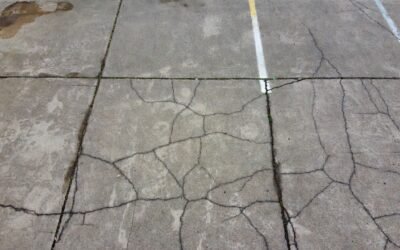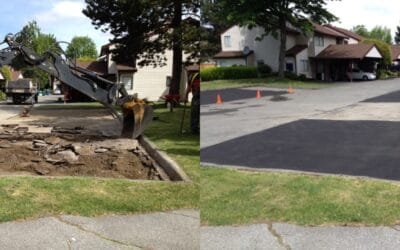

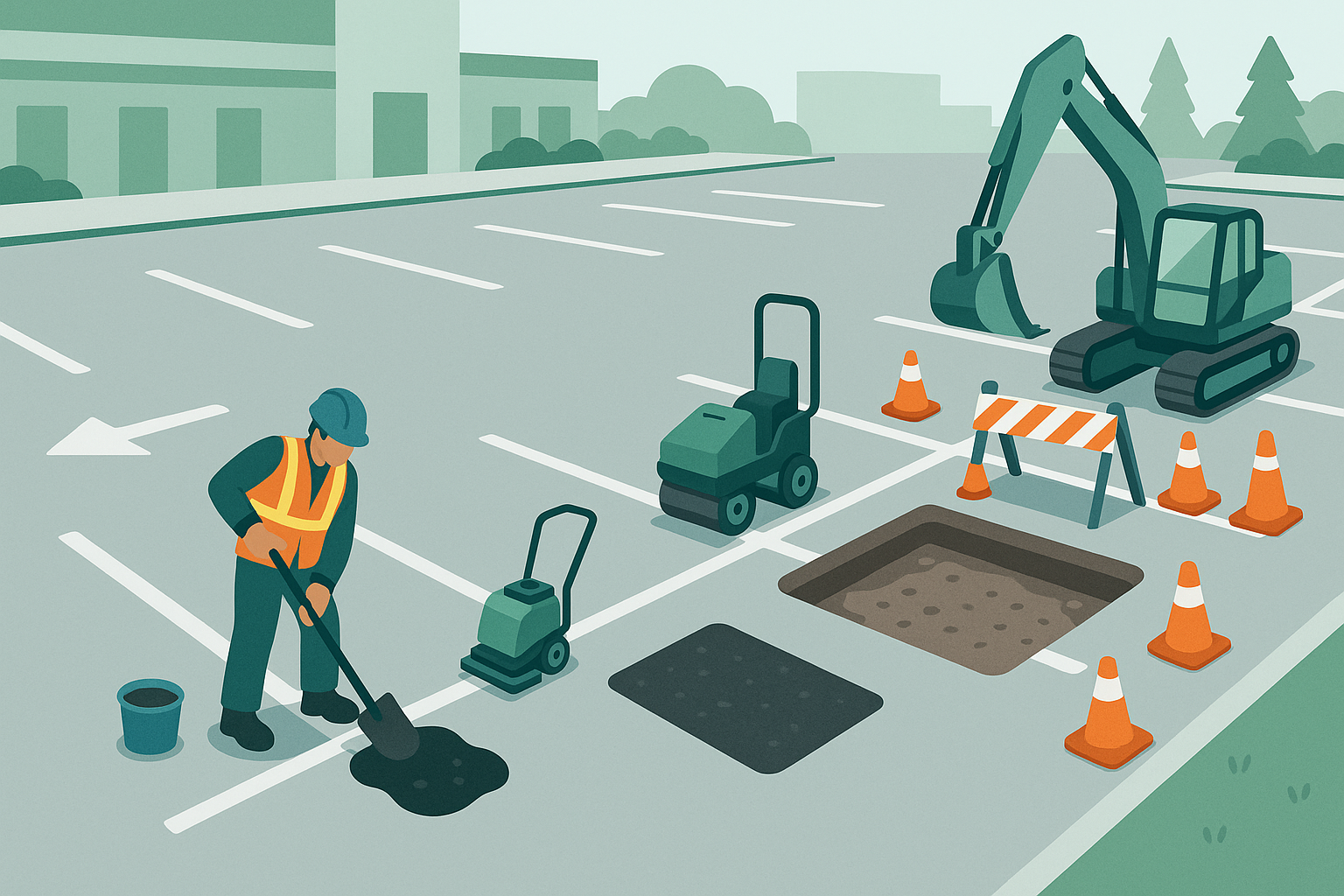
Potholes are more than just minor road imperfections—they present serious safety risks, damage vehicles, and accelerate pavement deterioration. However, not all potholes require the same repair strategy. Their size determines the materials, techniques, and costs involved in fixing them effectively. Whether it’s a shallow surface crack or a deep structural failure, understanding the factors behind pothole formation and expansion can help you choose the most efficient repair approach.
Table of Contents
Understanding Pothole Formation and Why Size Matters
Potholes form due to a combination of environmental conditions, traffic loads, and underlying pavement weaknesses. The longer they go untreated, the larger and more expensive they become to fix. Let’s explore the key factors that contribute to pothole development and why size plays a critical role in repair decisions.
What Causes Potholes to Form?
Pothole formation starts with small cracks in the pavement that gradually worsen. The most common causes include:
- Water Infiltration – Moisture seeps into cracks and weakens the pavement’s foundation. Freezing and thawing cycles expand the cracks, causing chunks of asphalt to break away.
- Traffic Stress – Repeated pressure from vehicles, particularly heavy trucks, worsens weak areas, eventually creating depressions.
- Temperature Changes – Extreme heat softens asphalt, while cold temperatures make it brittle, leading to cracking.
- Poor Construction – Weak base layers, improper drainage, or inadequate asphalt thickness can accelerate pothole formation.
- Neglected Maintenance – Small cracks that aren’t promptly sealed expand into larger potholes over time.
The Role of Weather, Traffic, and Subsurface Conditions
1. Weather Conditions
- Freeze-Thaw Cycles – Water trapped in cracks expands when frozen, causing the pavement to heave and break apart.
- Heavy Rainfall – Water pooling under the pavement erodes the base, making it prone to collapse.
- Extreme Heat – Prolonged high temperatures soften asphalt, making it susceptible to rutting and cracking.
2. Traffic Load
- Heavy Vehicles – Large trucks and buses exert more stress, deepening potholes faster.
- Frequent Braking and Acceleration – Roads near intersections experience more wear, accelerating pothole formation.
3. Subsurface Conditions
- Unstable Base Layers – Weak or poorly compacted soil leads to pavement shifting and cracks.
- Drainage Issues – Standing water weakens the pavement’s foundation, increasing pothole formation.
How Pothole Size Influences Repair Durability and Costs
The larger the pothole, the more complex and expensive the repair. Different pothole sizes require different repair techniques:
- Small Potholes (Under 12 inches, 1-2 inches deep) – Can often be patched with cold mix asphalt or quick-setting materials; low cost but requires monitoring.
- Medium Potholes (12-36 inches, 2-4 inches deep) – Require hot mix asphalt, infrared repair, or spray injection; moderate cost but longer-lasting results.
- Large Potholes (Over 36 inches, deeper than 4 inches) – Often need full-depth patching or complete asphalt replacement; higher cost but ensures pavement longevity.
Categorizing Potholes by Size and Their Common Repair Methods
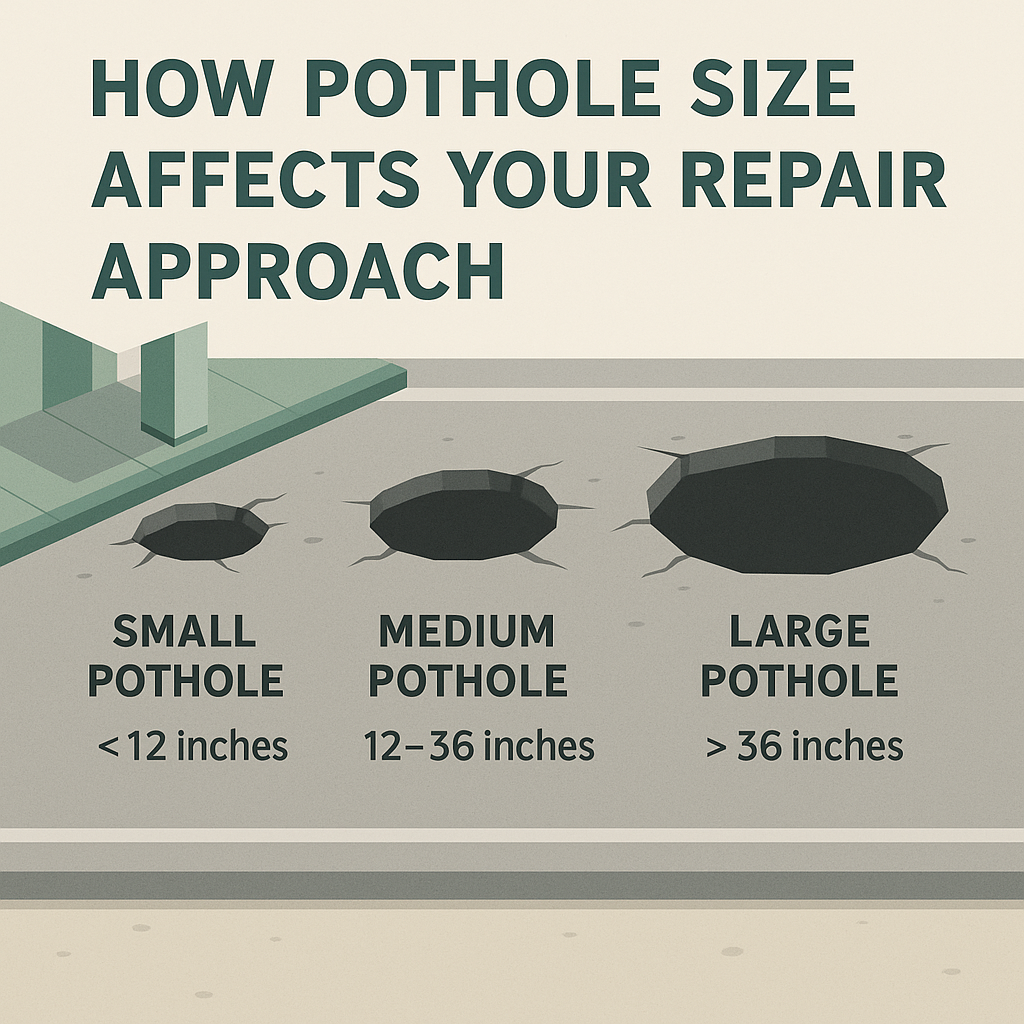
Understanding the correct repair method for each pothole size prevents unnecessary costs and ensures long-term pavement integrity.
Small Potholes (Less than 12 inches wide, 1-2 inches deep)
Best Repair Methods: Cold Mix Asphalt vs. Hot Mix Asphalt
- Cold Mix Asphalt – A quick, temporary fix that works in all weather conditions but lacks durability.
- Hot Mix Asphalt – More permanent but requires warm conditions for application and proper compaction.
DIY Repair Feasibility and Common Mistakes
Do:
- Clean out debris before applying asphalt.
- Compact the patch to prevent shifting.
Avoid:
- Skipping compaction, which leads to premature failure.
- Using cold mix asphalt as a long-term fix on high-traffic roads.
Durability of Small Pothole Repairs
- Cold mix asphalt: Lasts 3-12 months depending on traffic and weather.
- Hot mix asphalt: Can last 3-5 years with proper application.
Medium Potholes (12-36 inches wide, 2-4 inches deep)
Semi-Permanent vs. Full-Depth Patching
- Semi-Permanent Patching – Involves cleaning, filling, and compacting with hot mix asphalt for a lasting repair.
- Full-Depth Patching – Used when potholes extend to the base, requiring excavation and new asphalt layers.
Best Materials for Medium Potholes
- Hot Mix Asphalt – The most durable option for high-traffic roads.
- Infrared Repair – Uses heat to blend new asphalt with the existing pavement for a seamless fix.
- Spray Injection – Quickly fills potholes and seals cracks for temporary repairs.
The Importance of Compaction
Without proper compaction, even the best materials will fail. Using a vibratory plate compactor or roller ensures:
- Better asphalt bonding.
- Resistance to future cracking.
Large Potholes (Over 36 inches wide, deeper than 4 inches)
Full-Depth Reclamation: When to Rebuild from the Base
When potholes reach this size, surface patching is ineffective. Full-depth reclamation involves:
- Removing failed asphalt and base layers.
- Rebuilding a stable foundation with aggregate and new asphalt.
- Ensuring proper drainage to prevent future deterioration.
Best Materials for Large Potholes
- Aggregate Base – Strengthens the substructure before asphalt application.
- Hot Mix Asphalt – Ensures a durable, high-performance surface.
- Reinforced Patches – Used in areas with heavy loads to prevent future failure.
Why Professional Repair is Necessary
Due to the depth and complexity of large potholes, hiring professionals is often the best choice. Experts:
- Ensure complete removal of unstable pavement.
- Use specialized equipment for proper compaction.
- Apply long-lasting materials suited for heavy traffic.
Key Takeaways
- Smaller potholes can often be fixed with cold mix asphalt, but hot mix asphalt provides a more durable solution.
- Medium potholes require semi-permanent or full-depth patching, with compaction playing a key role in longevity.
- Large potholes demand full-depth reclamation and professional repair for long-term stability.
By choosing the right repair approach based on pothole size, you can extend pavement lifespan, reduce costs, and prevent recurring damage.
Selecting the Right Repair Approach Based on Pothole Size
The size of a pothole determines not just the repair method but also the tools, materials, and expertise required. While small potholes can often be fixed with DIY solutions, medium and large potholes demand more durable approaches and, in many cases, professional intervention. Below, we break down the best repair strategies based on pothole size.
DIY Fixes for Small Potholes: Pros, Cons, and Step-by-Step Guide
Small potholes (less than 12 inches wide and 1-2 inches deep) are the easiest to repair and can often be handled without professional assistance. However, DIY fixes come with limitations.
Pros of DIY Small Pothole Repairs
- Cost-effective – Lower material and labour costs compared to hiring a contractor.
- Quick application – Repairs can be completed in under an hour.
- Minimal tools required – A shovel, tamper, and asphalt patching material are usually sufficient.
Cons of DIY Small Pothole Repairs
- Shorter lifespan – Cold patch repairs may only last a few months
- Surface may become uneven – Without proper compaction, patches can settle or erode quickly.
- Limited effectiveness on high-traffic roads – Frequent vehicle stress can cause the patch to dislodge.
Step-by-Step Guide to DIY Pothole Repair
- Clean the pothole – Remove loose debris, dirt, and standing water.
- Apply a bonding agent (optional) – If using hot mix asphalt, apply a tack coat to improve adhesion.
- Fill with asphalt mix – Use cold mix for a temporary fix or hot mix for better durability.
- Compact the material – Use a tamper, hand compactor, or vibratory plate compactor.
- Level the patch – Ensure the repair is flush with the surrounding pavement to prevent water pooling.
- Monitor and maintain – Reapply if settling occurs, and seal cracks around the patch to prevent water infiltration.
When to Use Cold Mix Asphalt vs. Hot Mix Asphalt for Different Sizes
Choosing the right asphalt mix is crucial for a successful pothole repair. Both cold mix and hot mix asphalt serve different purposes based on pothole size and repair conditions.
| Factor | Cold Mix Asphalt | Hot Mix Asphalt |
| Best for | Small potholes, temporary repairs | Medium to large potholes, permanent repairs |
| Application temperature | Can be applied in any weather | Requires warm conditions (above 50°F) |
| Durability | Lasts 3-12 months | Lasts 3-5 years |
| Equipment needed | Basic tools (shovel, tamper) | Requires a compactor for best results |
| Traffic resistance | Less durable in high-traffic areas | Ideal for heavy-traffic roads |
Use cold mix asphalt for small potholes and quick fixes in cold or wet conditions.
Use hot mix asphalt for medium to large potholes and long-term durability.
How Medium and Large Potholes Require Specialized Equipment
As potholes grow in size, DIY methods become less effective due to the need for stronger materials and more advanced equipment.
Equipment Required for Medium Potholes (12-36 inches wide, 2-4 inches deep)
- Infrared heater – Softens existing asphalt for seamless patching.
- Hot mix asphalt application tools – Includes a tack coat sprayer and asphalt rake.
- Vibratory plate compactor or roller – Ensures proper compaction for long-term stability.
Equipment Required for Large Potholes (Over 36 inches wide, deeper than 4 inches)
- Excavator or pavement saw – Used to remove damaged asphalt and base material.
- Aggregate base layer compactor – Strengthens the foundation before asphalt application.
- Heavy-duty asphalt roller – Compacts the new asphalt for a smooth, long-lasting surface.
Why Medium and Large Potholes Need Professional Repairs
- The use of industrial-grade compaction equipment prevents future settlement.
- Improper asphalt thickness can lead to premature failure without the right expertise.
- Structural repairs may be necessary if the pothole extends into the base layer.
For potholes exceeding 2-4 inches in depth or spanning more than 12 inches in width, hiring a professional ensures a durable, long-term solution.
Key Takeaways
- Small potholes can often be repaired with DIY cold mix asphalt, but proper compaction is essential.
- Hot mix asphalt is the best choice for medium to large potholes, offering long-lasting results.
- Larger potholes require specialized equipment, making professional repairs the most reliable option.
Cost Considerations for Pothole Repairs Based on Size
Repairing potholes efficiently requires balancing cost and durability. The size of a pothole directly impacts the materials, labor, and equipment required for repair. While smaller potholes can often be fixed inexpensively with DIY methods, larger potholes demand professional intervention, which increases costs. Additionally, neglecting potholes can lead to higher long-term expenses due to worsening road conditions.
Cost Breakdown by Pothole Size
The following table provides a general estimate of repair costs based on pothole size, repair method, and whether the repair is done as a DIY project or by professionals.
| Pothole Size | DIY Cost Estimate | Professional Repair Cost | Common Repair Method | Expected Durability |
| Small (Under 12 inches wide, 1-2 inches deep) | $10 – $50 | $75 – $200 | Cold mix asphalt, quick patching | 3-12 months |
| Medium (12-36 inches wide, 2-4 inches deep) | $50 – $150 | $250 – $800 | Hot mix asphalt, infrared repair, spray injection | 3-5 years |
| Large (Over 36 inches wide, deeper than 4 inches) | Not recommended | $1,000 – $5,000+ | Full-depth patching, asphalt overlay, base repair | 5-10 years |
Key Takeaway: The larger the pothole, the more expensive the repair. Addressing potholes early significantly reduces costs over time.
Comparing DIY Costs vs. Hiring Professionals
For smaller potholes, a DIY repair can be a cost-effective solution. However, medium and large potholes require specialized equipment and expertise, making professional repairs the better long-term investment.
When DIY Repairs Make Sense
- For small potholes in low-traffic areas – Cold mix asphalt and patching materials are affordable and easy to apply.
- For temporary fixes – A quick DIY patch can provide a short-term solution until a permanent repair is made.
- When budget constraints exist – DIY repairs allow for an immediate fix without large upfront costs.
When to Hire a Professional
- For medium to large potholes – Proper compaction, material selection, and base stabilization require professional expertise.
- For high-traffic roads or driveways – Poorly compacted DIY patches can fail quickly under heavy vehicle loads.
- For long-term durability – Professional repairs last years longer than most DIY patches.
Key Takeaway: While DIY is more affordable upfront, professional repairs provide greater longevity, reducing the need for frequent reapplications.
How Pothole Expansion Impacts Long-Term Expenses
Delaying pothole repairs can significantly increase costs over time. Here’s how:
- Small cracks grow into larger potholes
- Minor surface damage that could have been fixed with a $10 sealant turns into a deep pothole requiring a $1,000+ repair.
- Weakened pavement base leads to structural damage
- Once water infiltrates the base layer, entire sections of pavement may need replacement, costing thousands.
- Vehicle damage and liability risks increase
- Unaddressed potholes lead to flat tires, suspension damage, and potential lawsuits from accidents.
- Frequent temporary fixes add up
- Reapplying cold mix asphalt multiple times can cost more than a single professional repair in the long run.
Key Takeaway: Investing in early repairs saves significant costs and prevents larger infrastructure issues.
Preventing Potholes from Expanding and Recurring
Potholes don’t just appear overnight—they develop from minor cracks and pavement weaknesses that worsen over time. Preventive maintenance is the most cost-effective way to reduce pothole formation and prolong the lifespan of your pavement. By implementing regular inspections, timely repairs, and proactive surface treatments, you can prevent potholes from growing into costly repairs.
Regular Inspection and Early Repair Strategies
Routine pavement inspections help identify small cracks and early signs of deterioration before they turn into potholes. A proactive maintenance approach can save money and extend pavement life.
How to Conduct Regular Pavement Inspections
- Look for early signs of damage – Small cracks, surface depressions, and raveling indicate future pothole formation.
- Inspect high-traffic areas frequently – Roads, driveways, and parking lots with heavy vehicle loads experience faster wear.
- Check after extreme weather – Freezing temperatures, heavy rainfall, and heatwaves accelerate pavement deterioration.
Best Practices for Early Repairs
- Fill small cracks immediately – Prevents water from seeping in and causing further damage.
- Apply a temporary cold patch to small potholes – Provides a short-term fix until a permanent repair can be made.
- Recompact loose areas – Helps stabilize weak pavement sections before they develop into potholes.
Key Takeaway: Fixing minor pavement issues early prevents costly pothole repairs later.
Sealcoating and Crack Filling: The First Line of Defence
Proper surface protection is essential to preventing potholes. Two of the most effective preventive measures are sealcoating and crack filling.
Sealcoating: Protecting Pavement from Weather and Wear
Sealcoating adds a protective layer over asphalt surfaces, shielding them from moisture, UV rays, and vehicle traffic.
Benefits of Sealcoating:
- Reduces water penetration, preventing cracks and pothole formation.
- Extends the lifespan of asphalt by protecting it from oxidation and wear.
- Provides a smoother, more durable surface for vehicles.
How often should you apply sealcoating?
- Every 2-3 years for high-traffic areas.
- Every 3-5 years for residential driveways and low-traffic surfaces.
Crack Filling: Preventing Water Infiltration
Crack filling is the process of sealing small cracks in asphalt before they expand into potholes.
Best Practices for Crack Filling:
- Use hot rubberized crack filler for flexible, long-lasting protection.
- Fill cracks wider than 1/4 inch to prevent water intrusion.
- Apply crack filler before sealcoating for maximum effectiveness.
Key Takeaway: Sealcoating and crack filling work together to prevent potholes by protecting pavement from moisture and traffic damage.
Proper Drainage and Base Stability to Prevent Large Potholes
Water is the number one enemy of asphalt and concrete surfaces. Poor drainage weakens pavement from below, leading to pothole formation. Ensuring proper drainage and a stable base prevents potholes from appearing in the first place.
Improving Drainage to Reduce Water Damage
- Ensure proper slope and grading – Water should run off pavement, not pool on the surface.
- Clear drainage systems regularly – Clogged gutters and storm drains allow water to accumulate, increasing pavement damage.
- Install drainage channels where needed – French drains, trench drains, and culverts help redirect water away from roads and parking lots.
Strengthening the Base Layer for Long-Lasting Pavement
The base layer is the foundation of any pavement structure. If the base is weak, potholes will form no matter how well the surface is maintained.
Best Practices for a Strong Base:
- Use high-quality aggregate material – A well-compacted base prevents shifting and cracking.
- Ensure proper compaction during construction – Loose soil and poorly compacted layers lead to unstable pavement.
- Repair base failures promptly – Sunken areas or soft spots indicate base issues that must be addressed before potholes form.
Key Takeaway: Proper drainage and a strong base are essential for preventing pothole formation and ensuring long-lasting pavement durability.
DIY vs. Professional Pothole Repair: What’s the Right Choice?
When dealing with potholes, choosing between a DIY repair and hiring a professional depends on factors like pothole size, location, budget, and long-term durability. While small potholes in low-traffic areas can often be handled independently, larger or recurring potholes require professional intervention to ensure a lasting solution. Below, we explore when a DIY repair is feasible, when to seek professional help, and what factors influence the longevity of each approach.
When You Can Handle Repairs Yourself
DIY pothole repairs are a good option for small potholes (less than 12 inches wide and 1-2 inches deep) in low-traffic areas such as private driveways, parking lots, and residential roads.
DIY repairs make sense when:
- The pothole is shallow and does not extend into the base layer.
- You need a quick, temporary fix to prevent further deterioration.
- The area sees minimal traffic, reducing the risk of patch failure.
- You have access to basic tools like a tamper, shovel, and asphalt patch mix.
Limitations of DIY Repairs:
- Less durable than professional repairs, requiring more frequent reapplications.
- Poor compaction may lead to premature failure.
- Cold mix asphalt (commonly used for DIY repairs) doesn’t bond as well as hot mix, leading to cracks and erosion.
How to DIY a Small Pothole Repair
- Clean the pothole – Remove loose debris, dirt, and standing water.
- Apply cold mix asphalt – Fill the pothole in layers for better stability.
- Compact the patch – Use a tamper or vibratory plate compactor to ensure a tight bond.
- Seal the edges – Applying a crack sealant prevents water infiltration.
- Monitor and reapply as needed – Check the repair periodically for signs of wear.
Key Takeaway: DIY repairs work best for small potholes in low-traffic areas but should be considered temporary solutions.
When to Call in the Pros for a Permanent Solution
For medium and large potholes (over 12 inches wide and deeper than 2 inches), professional repair is the best option. These potholes often indicate structural pavement failure, requiring specialized materials and equipment to ensure a lasting fix.
Hire professionals when:
- The pothole is large, deep, or keeps coming back.
- The road or driveway experiences heavy traffic (commercial lots, main roads).
- The underlying pavement base is compromised, requiring excavation.
- Proper compaction is critical for longevity.
- A long-term solution is necessary to avoid repeated repairs.
Why DIY isn’t recommended for large potholes:
- Cold mix asphalt fails quickly in high-traffic areas.
- Lack of proper compaction leads to premature deterioration.
- Drainage and base issues require professional expertise.
- Equipment like infrared heaters, vibratory rollers, and hot mix asphalt plants are needed for a durable repair.
What Professionals Offer That DIY Can’t
- Hot mix asphalt for superior bonding and longevity.
- Infrared asphalt repair for seamless blending with existing pavement.
- Full-depth patching that strengthens the road base before resurfacing.
- Proper grading and compaction to prevent water infiltration and cracking.
Key Takeaway: If the pothole is deep, large, or in a high-traffic area, professional repair is the only long-term solution.
Factors Affecting the Longevity of DIY vs. Professional Repairs
Even the best pothole repair methods can fail prematurely if certain factors aren’t considered. Here’s what influences the durability of a repair:
| Factor | DIY Repairs | Professional Repairs |
| Material Used | Cold mix asphalt (temporary) | Hot mix asphalt, infrared patching (long-lasting) |
| Compaction Method | Manual tamper or hand tools | Vibratory roller or plate compactor |
| Traffic Load | Suitable for low-traffic areas | Designed for high-traffic roads and commercial lots |
| Weather Conditions | Can be done in any season | Best applied in warm, dry conditions for durability |
| Drainage Considerations | Often overlooked | Proper grading and drainage addressed |
| Repair Lifespan | 3-12 months | 3-10 years |
Key Takeaway: Professional pothole repairs last significantly longer due to better materials, compaction, and drainage solutions.
Tools, Materials, and Equipment Needed for Different Pothole Sizes
Repairing potholes effectively requires the right tools and materials, which vary depending on the size and depth of the pothole. Small potholes can often be repaired with basic DIY tools, while larger potholes require specialized equipment and professional expertise. Additionally, handling asphalt and heavy machinery comes with safety risks, making it essential to follow proper precautions.
Basic DIY Repair Tools for Small Potholes
For small potholes (less than 12 inches wide and 1-2 inches deep), a DIY approach can be effective with minimal tools and materials.
Essential Tools:
- Shovel or Trowel – For clearing debris and applying asphalt patch.
- Tamper or Hand Compactor – Helps compact the asphalt for a smoother, longer-lasting repair.
- Broom or Wire Brush – Clears dirt and loose material before patching.
- Gloves and Safety Glasses – Protects hands and eyes from asphalt and dust.
Materials Needed:
- Cold Mix Asphalt – Best for temporary fixes; easy to apply in any weather.
- Hot Mix Asphalt (if available) – Provides a stronger bond but requires proper compaction.
- Crack Sealant (Optional) – Seals edges of the repair to prevent water infiltration.
DIY Repair Steps:
- Clear debris and dust from the pothole.
- Apply cold mix asphalt in layers, compacting each one.
- Use a tamper to compress the material firmly.
- Smooth out the patch to match the surrounding pavement.
- Seal the edges with crack filler for added durability.
Key Takeaway: For small potholes, simple tools and materials can provide a quick fix, but compaction is critical to prevent premature failure.
Heavy Equipment Required for Large Pothole Repairs
For medium and large potholes (over 12 inches wide and deeper than 2 inches), specialized machinery is needed to ensure a long-lasting repair.
Equipment for Medium Potholes (12-36 inches wide, 2-4 inches deep):
- Infrared Heater – Softens surrounding asphalt for seamless patching.
- Hot Mix Asphalt Paver – Spreads asphalt evenly for proper coverage.
- Vibratory Plate Compactor – Ensures tight compaction to prevent future cracks.
Equipment for Large Potholes (Over 36 inches wide, deeper than 4 inches):
- Excavator or Pavement Saw – Removes damaged pavement and base materials.
- Aggregate Base Compactor – Stabilizes the base layer before asphalt application.
- Asphalt Roller – Creates a smooth, durable surface for long-term wear resistance.
- Dump Truck for Asphalt Transport – Keeps hot mix asphalt at the right temperature during transport and application.
Materials for Large Pothole Repairs:
- Aggregate Base – Strengthens the foundation before asphalt is applied.
- Hot Mix Asphalt – Provides superior durability in high-traffic areas.
- Tack Coat or Bonding Agent – Enhances adhesion between new and existing asphalt.
Key Takeaway: For medium and large potholes, using the right equipment is essential for proper compaction, base stabilization, and long-term performance.
Safety Precautions When Handling Asphalt and Machinery
Whether using hand tools for small potholes or heavy equipment for larger repairs, safety is a priority when dealing with asphalt and machinery.
General Safety Precautions:
- Wear Protective Gear – Always use gloves, safety glasses, and a dust mask when handling asphalt.
- Work in a Well-Ventilated Area – Asphalt fumes can be hazardous in enclosed spaces.
- Use Reflective Vests and Traffic Cones – Essential for roadwork to alert drivers of ongoing repairs.
Safety When Using Hand Tools:
- Keep tools clean and dry to maintain a good grip.
- Avoid direct contact with hot asphalt to prevent burns
- Lift with your legs, not your back when handling heavy bags of asphalt.
Safety When Operating Heavy Equipment:
- Ensure proper training before using compactors, rollers, or infrared heaters.
- Never operate equipment alone – Always have a spotter for safety.
- Check machinery before use to ensure it’s in working condition.
- Be aware of your surroundings – Watch for pedestrians and vehicles when working near roadways.
Key Takeaway: Proper safety precautions prevent injuries and ensure that asphalt repairs are completed efficiently and securely.
Common Mistakes to Avoid in Pothole Repairs
Pothole repairs can fail prematurely if not done correctly. Whether it’s a DIY fix or a professional job, choosing the wrong materials, improper preparation, or neglecting weather conditions can lead to a weak repair that deteriorates quickly. Avoiding these common mistakes ensures a long-lasting and cost-effective solution.
Using the Wrong Materials for Pothole Size
Not all pothole repair materials are created equal. Choosing the wrong one can lead to rapid deterioration and wasted money.
Common Material Mistakes:
- Using cold mix asphalt for large potholes – It’s a temporary fix and breaks apart under heavy traffic.
- Skipping tack coat for hot mix asphalt repairs – This reduces adhesion, causing the patch to lift.
- Using non-asphalt fillers (like gravel alone) without proper sealing – Water seeps in, making the pothole return faster.
Best Material Choices Based on Pothole Size:
- Cold Mix Asphalt – Works well for small potholes as a temporary fix.
- Hot Mix Asphalt – Ideal for medium to large potholes and high-traffic areas.
- Infrared Asphalt Repair – Blends new and old asphalt for seamless repairs on medium potholes
- Full-Depth Patching – The best solution for large potholes, ensuring a stable base.
Key Takeaway: Match the material to the pothole size to ensure durability and long-term performance.
Skipping Proper Surface Preparation and Compaction
A pothole repair is only as good as its surface preparation and compaction. If the patch isn’t properly compacted, it will break apart under stress.
Common Preparation and Compaction Mistakes:
- Not cleaning the pothole before repair – Dirt, debris, and water weaken the asphalt bond.
- Filling the pothole in one large pour – Asphalt should be applied in layers, with each layer compacted separately.
- Skipping compaction – Loose asphalt creates air gaps, leading to rapid deterioration.
Best Practices for Proper Compaction:
- Remove debris and moisture before applying asphalt.
- Apply asphalt in layers if the pothole is deep (compacting each layer).
- Use a plate compactor, roller, or tamper to achieve a solid, well-bonded patch.
Key Takeaway: Without proper preparation and compaction, even high-quality asphalt won’t hold up against traffic and weather.
Not Accounting for Weather and Temperature Conditions
Temperature and weather conditions significantly impact how well an asphalt patch holds up over time. Ignoring these factors can lead to premature cracking, loosening, or complete failure.
Common Weather-Related Mistakes:
- Applying hot mix asphalt in cold weather – It won’t compact properly and may crumble.
- Using cold mix asphalt in extreme heat – It stays too soft and doesn’t bond well.
- Repairing potholes in wet conditions – Water weakens the patch, causing it to fail quickly.
Best Conditions for Pothole Repair:
- Hot mix asphalt: Best applied in temperatures above 50°F (10°C) for proper compaction.
- Cold mix asphalt: Can be applied in colder conditions but is only a temporary solution.
- Dry conditions: Always remove standing water before patching to ensure adhesion.
Key Takeaway: Timing your pothole repair based on weather conditions ensures better adhesion, compaction, and longevity.
Conclusion
Pothole repairs vary in complexity based on their size, depth, and location. Choosing the right repair method ensures durability, cost efficiency, and long-term pavement stability. Whether you’re handling a minor surface defect or a deep structural pothole, matching the repair approach to the pothole size is key to preventing recurring damage.
Key Takeaways on Matching Pothole Size with the Right Repair Approach
- Small potholes (under 12 inches, 1-2 inches deep) can be repaired with cold mix asphalt as a temporary fix, but hot mix asphalt provides a longer-lasting solution.
- Medium potholes (12-36 inches, 2-4 inches deep) require hot mix asphalt, infrared repair, or spray injection with proper compaction to ensure longevity.
- Large potholes (over 36 inches wide, deeper than 4 inches) typically need full-depth patching, base repair, and professional equipment for a durable, long-term solution.
- Skipping proper preparation and compaction leads to premature failures—cleaning, layering, and compacting the repair correctly ensures lasting results.
Why Addressing Potholes Early Saves Time and Money
Neglecting small pavement cracks and potholes allows them to expand, increasing repair costs and road damage. Early intervention helps:
- Reduce costs – Fixing small potholes is significantly cheaper than reconstructing pavement after extensive damage.
- Prevent vehicle damage – Poor road conditions cause tire wear, suspension issues, and safety hazards.
- Extend pavement life – Regular maintenance minimizes the need for costly resurfacing or full-depth reconstruction.
- Key Takeaway: Timely pothole repairs save money, improve road safety, and extend the lifespan of your pavement.
Next Steps: DIY Solutions, Preventive Measures, and When to Call a Professional
- For minor potholes in low-traffic areas, a DIY repair using cold mix asphalt is a quick, temporary solution.
- For medium potholes, opt for hot mix asphalt or infrared patching, ensuring proper compaction to avoid repeat repairs.
- For large potholes, high-traffic roads, or severe damage, hiring a professional ensures a long-lasting and structurally sound repair.
- Preventive measures, like crack filling, sealcoating, and improving drainage, reduce the risk of potholes forming in the first place.
Key Takeaway: Choose the right repair approach based on pothole size, act early, and invest in preventive maintenance to avoid costly repairs.
FAQs
1. How long does each type of pothole repair last?
- Cold mix asphalt (DIY repairs): 3-12 months
- Hot mix asphalt (professional repairs): 3-5 years
- Infrared repair: 3-7 years
- Full-depth patching: 5-10 years
2. Can I repair potholes in the winter, or should I wait until warmer months?
Cold mix asphalt can be applied in any weather, making it useful for emergency winter repairs. However, for a permanent fix, it’s best to use hot mix asphalt in warmer temperatures (above 50°F/10°C) for proper compaction.
3. What is the best way to ensure my pothole repair doesn’t fail prematurely?
- Clean the pothole thoroughly before applying asphalt.
- Use the right materials based on the pothole size and location.
- Apply asphalt in layers and compact each one properly.
- Seal the edges to prevent water infiltration.
4. Does pothole size affect which materials I can use?
Yes. Small potholes can be temporarily fixed with cold mix asphalt, but medium and large potholes require hot mix asphalt, infrared repair, or full-depth patching for durability.
5. How do I determine if a pothole requires a professional fix?
- If the pothole is deeper than 2 inches and wider than 12 inches
- If it keeps reappearing despite previous repairs
- If it’s located in a high-traffic area
- If the pavement base is compromised (soft spots, sunken areas)