
What Is Crack Sealing, and Why Does It Matter?
Crack sealing is a proactive pavement maintenance technique that involves filling and sealing cracks in asphalt or concrete surfaces to prevent water, debris, and other contaminants from infiltrating the pavement structure. This process not only restores the pavement’s appearance but also protects its integrity by stopping small issues from escalating into costly repairs or replacements.
Table of Contents
Crack sealing is essential for maintaining the health of paved surfaces such as roads, parking lots, and driveways. Without intervention, cracks can allow moisture to seep beneath the surface, weakening the sub-base and causing further deterioration. By addressing cracks early, you can safeguard your pavement against more significant damage and preserve its functionality.
The Role of Crack Sealing in Pavement Longevity
Crack sealing plays a critical role in extending the lifespan of your pavement. Over time, external factors such as weather fluctuations, heavy traffic, and natural wear and tear create small cracks that, if left untreated, worsen due to thermal expansion, freeze-thaw cycles, and water penetration.
By filling these cracks, crack sealing provides a protective barrier that:
- Prevents moisture from compromising the pavement’s foundation.
- Reduces stress on the surface caused by heavy vehicle loads.
- Minimizes the impact of environmental factors such as extreme heat or cold.
Ultimately, crack sealing ensures that your pavement stays durable and functional for years, delaying the need for more extensive and expensive maintenance efforts like resurfacing or complete replacement.
Key Benefits of Addressing Cracks Early
Proactively sealing cracks in your pavement offers several significant benefits:
- Cost Savings: Early intervention helps avoid the need for costly structural repairs or full pavement replacement. Crack sealing is a low-cost solution compared to repairing widespread damage.
- Enhanced Safety: Sealing cracks prevents hazards like potholes and uneven surfaces, ensuring a safer experience for drivers and pedestrians.
- Improved Aesthetic Appeal: Crack sealing restores the smooth and uniform appearance of your pavement, boosting curb appeal and maintaining a professional look.
- Protection Against Water Damage: Sealed cracks keep water from infiltrating and eroding the pavement’s sub-base, which is one of the leading causes of structural failure.
- Extended Pavement Lifespan: Preventative crack sealing slows the rate of deterioration, helping your pavement withstand heavy use and environmental stress for an extended period.
By investing in crack sealing as part of your routine maintenance strategy, you can protect your pavement and maximize your investment over the long term.
The Problem with Pavement Cracks
What Causes Pavement Cracks?
Pavement cracks occur due to a combination of factors, including:
- Natural wear and tear: Over time, pavements degrade under constant exposure to elements and usage.
- Environmental factors: Conditions like freeze-thaw cycles cause the pavement to expand and contract, leading to cracks.
- Heavy vehicle traffic: Repeated stress from large or heavy vehicles accelerates the development of cracks.
Types of Pavement Cracks to Watch For
Different types of pavement cracks can indicate varying underlying issues, including:
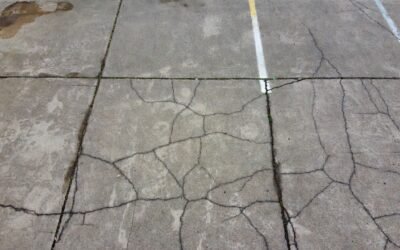
- Alligator cracking: Resembling a reptile’s skin, this pattern indicates sub-base failure due to heavy loads or water infiltration.
- Block cracks: Large rectangular cracks caused by shrinkage of the pavement due to temperature changes.
- Transverse and longitudinal cracks: Straight cracks running across or along the pavement, often resulting from thermal stress or improper construction.
Consequences of Untreated Cracks
Leaving cracks untreated can result in severe pavement issues, such as:
- Water infiltration and sub-base damage: Water seeps into the cracks, weakening the pavement’s foundation and leading to further damage.
- Accelerated structural deterioration: Small cracks expand into larger problems, requiring more extensive repairs.
- Increased safety hazards: Cracks can create tripping hazards for pedestrians and uneven surfaces for vehicles.
Why Preventative Crack Sealing Works
Extends the Lifespan of Your Pavement
Preventative crack sealing creates a protective barrier that halts further pavement deterioration. By sealing cracks early, you prevent moisture, debris, and other contaminants from infiltrating the surface, which reduces the likelihood of deeper structural issues and significantly extends the overall lifespan of your pavement.
Prevents Costly Repairs Down the Road
Addressing small cracks early through sealing avoids larger, more expensive repairs such as patching, resurfacing, or full pavement replacement. Preventative maintenance is a cost-effective solution that helps you manage your budget while maintaining pavement integrity.
Shields Against Moisture and Freeze-Thaw Damage
Crack sealing effectively blocks water from penetrating the surface. This protection is critical in regions with freeze-thaw cycles, as trapped water can freeze and expand, exacerbating cracks and weakening the pavement’s sub-base.
Improves Surface Safety and Usability
Cracks can pose safety hazards for both drivers and pedestrians, such as creating tripping risks or uneven surfaces. Crack sealing restores a smoother, safer surface, enhancing usability and reducing liability concerns.
Reduces Environmental Impact of Repairs
Preventative crack sealing minimizes the need for extensive pavement reconstruction, which can be resource-intensive and environmentally disruptive. By prolonging the life of your pavement, you reduce the frequency of repairs and conserve materials and energy.
Timing Is Key: When to Seal Cracks
How to Recognize the Right Time for Crack Sealing
Recognizing the right time to seal cracks is crucial for effective maintenance. Look for signs such as:
- Cracks that are wide enough to trap debris or allow water to seep in.
- Recent weather conditions causing visible damage or stress to the pavement.
- Frequent or heavy vehicle traffic that exacerbates wear and tear.
Seasonal Considerations for Maximum Effectiveness
Timing the crack sealing process during the right season ensures durability and effectiveness:
- Spring and fall are ideal sealing windows as moderate temperatures allow the sealant to adhere properly and cure without extreme weather interference.
- Avoid sealing during excessively hot or cold weather, as extreme conditions can compromise the sealant’s performance.
Signs Your Pavement Needs Immediate Attention
Some cracks demand urgent action to prevent further damage, including:
- Large or deep cracks that widen significantly over time.
- Signs of water pooling or infiltration in and around the cracks.
- Visible pavement erosion or subsidence near crack areas, indicating potential sub-base damage.
The Crack Sealing Process: Step-by-Step
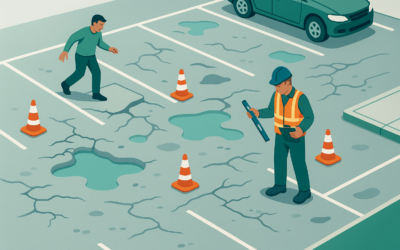
Step 1: Inspecting and Assessing Cracks
The first step in crack sealing is to thoroughly inspect the pavement and identify the types and severity of cracks. This assessment helps determine the best sealing method and products to use, ensuring effective and long-lasting results.
Step 2: Preparing the Surface for Sealing
Proper preparation is crucial for successful crack sealing. This step involves:
- Cleaning the cracks to remove debris, dirt, and vegetation.
- Ensuring the surface is dry to allow the sealant to adhere effectively.
Step 3: Choosing the Right Sealant
Selecting the appropriate sealant depends on factors like climate, crack width, and pavement material. Two common types of sealants include:
- Hot-applied sealants: These provide a durable solution for larger or heavily trafficked areas.
- Cold-applied sealants: Ideal for smaller cracks or quick repairs in moderate conditions.
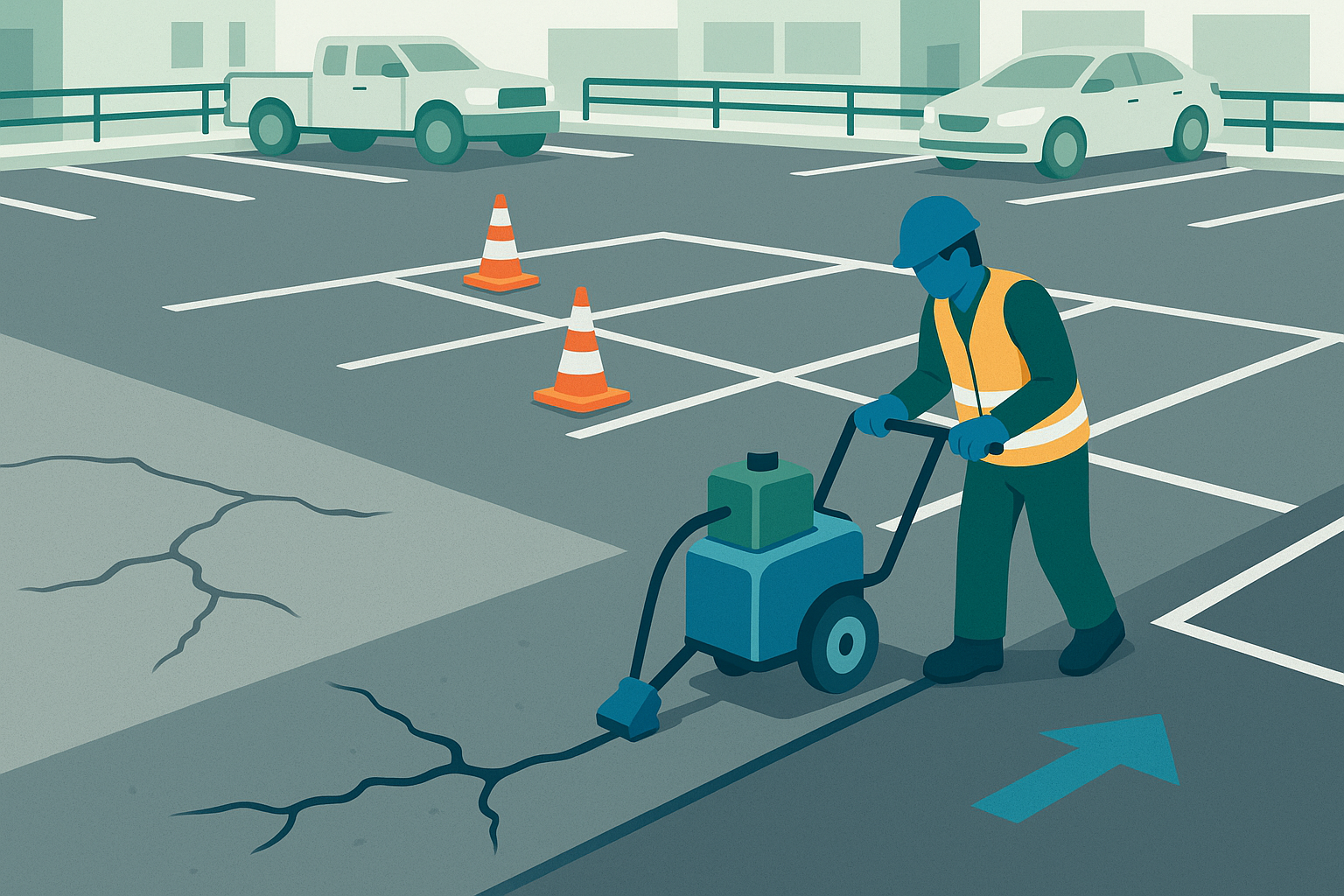
Step 4: Applying the Sealant Correctly
Application techniques involve specialized tools such as crack filling machines or pour pots. Key considerations include:
- Ensuring the sealant fully fills the crack.
- Smoothing the sealant to create a uniform surface.
Step 5: Allowing for Proper Curing Time
After application, the sealant requires time to cure. This ensures it forms a strong bond with the pavement and provides maximum durability. Follow the manufacturer’s recommendations for curing time, keeping the area closed to traffic during this period.
Selecting the Best Crack Sealing Products
Common Types of Sealants for Different Pavement Needs
Crack sealants come in various formulations designed for specific pavement conditions. Common types include:
- Hot-applied sealants: Best for large cracks and high-traffic areas, offering durability and flexibility.
- Cold-applied sealants: Ideal for quick repairs and smaller cracks, especially in moderate climates.
- Polymer-modified sealants: Enhanced with polymers for increased elasticity and longevity, suitable for extreme weather conditions.
- Asphalt emulsion sealants: Environmentally friendly options used for less severe cracks.
Factors to Consider in Sealant Selection
Selecting the right sealant involves assessing key factors such as:
- Climate conditions: Choose a sealant that can withstand local temperature fluctuations and weather patterns.
- Pavement material type: Match the sealant to the pavement’s composition (e.g., asphalt or concrete) for optimal adhesion and performance.
- Crack size and location: Ensure the sealant is appropriate for the width and depth of the cracks, as well as the pavement’s traffic level.
Trusted Brands and Product Recommendations
Several reputable brands provide high-quality crack sealants, including:
- Crafco: Known for durable hot-applied and polymer-modified sealants.
- SealMaster: Offers a variety of cold-applied and eco-friendly options.
- Henry: Provides versatile asphalt emulsion sealants for light to medium-duty applications.
- GemSeal: Specializes in professional-grade sealants for large-scale projects.
Professional Crack Sealing vs. DIY
Advantages of Hiring a Professional Service
Hiring a professional crack sealing service provides several advantages:
- Expertise: Professionals are trained to assess crack severity and select the best sealing method and products for long-lasting results.
- Specialized Equipment: Professional services utilize advanced tools such as crack routing machines and high-performance sealants that ensure a precise application.
- Efficiency: Experienced crews complete the job faster and with higher quality, minimizing disruption to traffic or property access.
- Durability: Professional-grade materials and techniques result in more durable repairs compared to DIY options.
When DIY Crack Sealing Is a Viable Option
DIY crack sealing can be an effective option under the following conditions:
- The cracks are small (less than ¼ inch wide) and not connected to deeper structural damage.
- The pavement is in good overall condition, with only minor cracks to address.
- You have access to the necessary tools, such as a crack filler, sealant, and safety equipment.
- You’re seeking a temporary solution or working on a low-traffic area like a residential driveway.
Cost Comparison: DIY vs. Professional Crack Sealing
While DIY crack sealing may seem cost-effective, it’s important to weigh the trade-offs:
- DIY Costs: Lower upfront costs for materials and equipment but potential for shorter repair lifespan.
- Professional Costs: Higher initial cost but results in durable, long-term performance, reducing the need for frequent reapplication.
| Cost component | DIY crack sealing | Professional crack sealing |
|---|---|---|
| Upfront materials and equipment | 40 | 70 |
| Internal labour time (site staff) | 30 | 0 |
| Re sealing and touch up over 5 years | 35 | 20 |
| Extra repairs from early failure or damage | 25 | 10 |
| 5 year total cost index | 130 | 100 |
5 year cost index, professional total set to 100 (lower is better).
How to interpret
- DIY has a lower upfront cash outlay (40 vs 70) but
- Property staff time, more frequent re sealing, and extra repairs push the 5 year total about 30 percent higher than using a professional crew.
- This aligns with industry guidance that crack sealing done with professional materials and methods typically lasts 3 to 8 years, while basic crack filling often lasts only 1 to 2 years, which drives up long term costs.
Cost and Value of Preventative Crack Sealing
Long-Term Savings of Preventative Maintenance
Investing in preventative crack sealing significantly reduces long-term expenses. By addressing cracks early, you avoid more costly repairs such as full-depth patching or complete resurfacing. Regular maintenance ensures your pavement remains functional and visually appealing without frequent large-scale interventions.
Cost of Ignoring Cracks: Repairs vs. Replacement
Ignoring cracks can escalate minor issues into major structural failures. For example:
- Small cracks left untreated can expand, leading to potholes and sub-base damage.
- Full pavement replacement can cost 10-20 times more than preventative crack sealing. Addressing issues promptly through sealing helps you manage costs effectively while extending the lifespan of your pavement.
Budget-Friendly Pavement Management Strategies
Effective pavement management doesn’t have to strain your budget. Key strategies include:
- Scheduling regular inspections to detect and repair small cracks early.
- Using high-quality sealants for long-lasting results.
- Combining crack sealing with other cost-effective maintenance techniques, such as seal coating and surface cleaning.
Preventative Maintenance vs. Replacement Costs
Assumes a 10 000 sq ft commercial parking lot over 10 years. All figures in CAD and rounded.
| Scenario | Typical activities over 10 years | Example schedule | Approx cost per visit | Approx 10 year total | Notes |
|---|---|---|---|---|---|
| Preventative maintenance with crack sealing | Crack sealing, minor patching, periodic seal coat | Years 1, 3, 5, 7, 9 crack seal; years 3, 7 seal coat | 2 000 to 4 000 | 18 000 to 28 000 | Pavement stays structurally sound and visually clean. Replacement can often be delayed 5 to 10 years or more. |
| Minimal maintenance then replacement | Occasional patching only, followed by full resurfacing or reconstruction | Small patches years 1 to 4; major patching year 5; full resurfacing year 6 or 7 | Patching 1 000 to 3 000; resurfacing 40 000 to 60 000 | 45 000 to 70 000 | Surface appears rough and deteriorated sooner. Business faces a large one time capital cost and longer disruption. |
Creating a Pavement Maintenance Plan
Incorporating Crack Sealing Into Routine Maintenance
A robust pavement maintenance plan begins with regular crack sealing as a core component. By integrating this preventative measure into your routine, you ensure the longevity and safety of your pavement. Schedule sealing annually or biannually, depending on traffic levels and environmental conditions.
Regular Inspections to Spot Early Issues
Frequent inspections are essential to identify cracks early, before they expand and cause significant damage. Inspect your pavement for:
- Hairline cracks
- Water pooling
- Uneven or sagging areas Conduct these inspections seasonally or after extreme weather events.
Scheduling Preventative Services for Optimal Results
Preventative services, including crack sealing, should be strategically scheduled:
- Align services with moderate weather conditions, such as spring or fall.
- Combine crack sealing with complementary maintenance tasks like seal coating.
- Use a professional contractor to ensure high-quality and long-lasting repairs.
Conclusion: Protect Your Pavement Investment
Summary of Key Takeaways
Preventative crack sealing is a highly cost-effective strategy for extending the lifespan of your pavement. Regular inspections and timely interventions ensure small issues are addressed before they evolve into significant and expensive repairs. By prioritizing crack sealing, you protect both the structural integrity and appearance of your paved surfaces.
Encouragement to Take Action
Now is the time to evaluate your pavement’s condition and plan for maintenance. Whether you choose to hire professionals or take a DIY approach, incorporating crack sealing into your routine can save you time, money, and stress in the long run. Be proactive and schedule your next crack sealing session before damage escalates.
Final Thought: Preventative Maintenance Pays Off
Investing in preventative maintenance, such as crack sealing, delivers lasting value by reducing long-term costs and preserving the quality of your pavement. Taking action today ensures that your pavement remains safe, functional, and visually appealing for years to come.
FAQs on Crack Sealing
How do I know if my pavement is a candidate for crack sealing?
Pavement with small to medium-sized cracks (less than ¼ inch wide) is generally a good candidate for crack sealing. The pavement should also be in relatively good condition overall, without severe structural damage or widespread deterioration.
Is crack sealing a permanent solution?
No, crack sealing is not a permanent solution but rather a preventative maintenance technique. It helps extend the life of the pavement and delays the need for more extensive repairs or replacement. Reapplication may be needed over time as the pavement continues to age.
Can crack sealing be done during winter?
Crack sealing is not ideal during winter due to cold temperatures, which can prevent the sealant from adhering properly and curing effectively. The best time for crack sealing is typically in spring or fall when temperatures are moderate.
How long does the crack sealing process take?
The process duration depends on the size of the project, but most crack sealing jobs can be completed within a day or two. Curing times vary based on the sealant used, with hot-applied sealants typically requiring less time than cold-applied options.
How often should crack sealing be performed on average?
Crack sealing should generally be performed every 2-3 years or as needed, depending on the level of traffic, environmental conditions, and the overall state of the pavement.