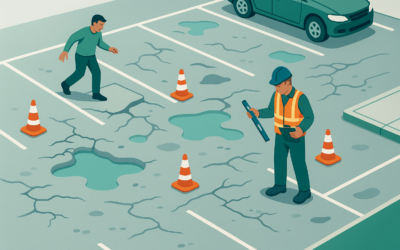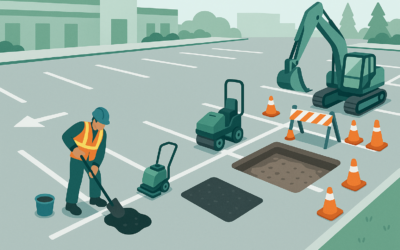

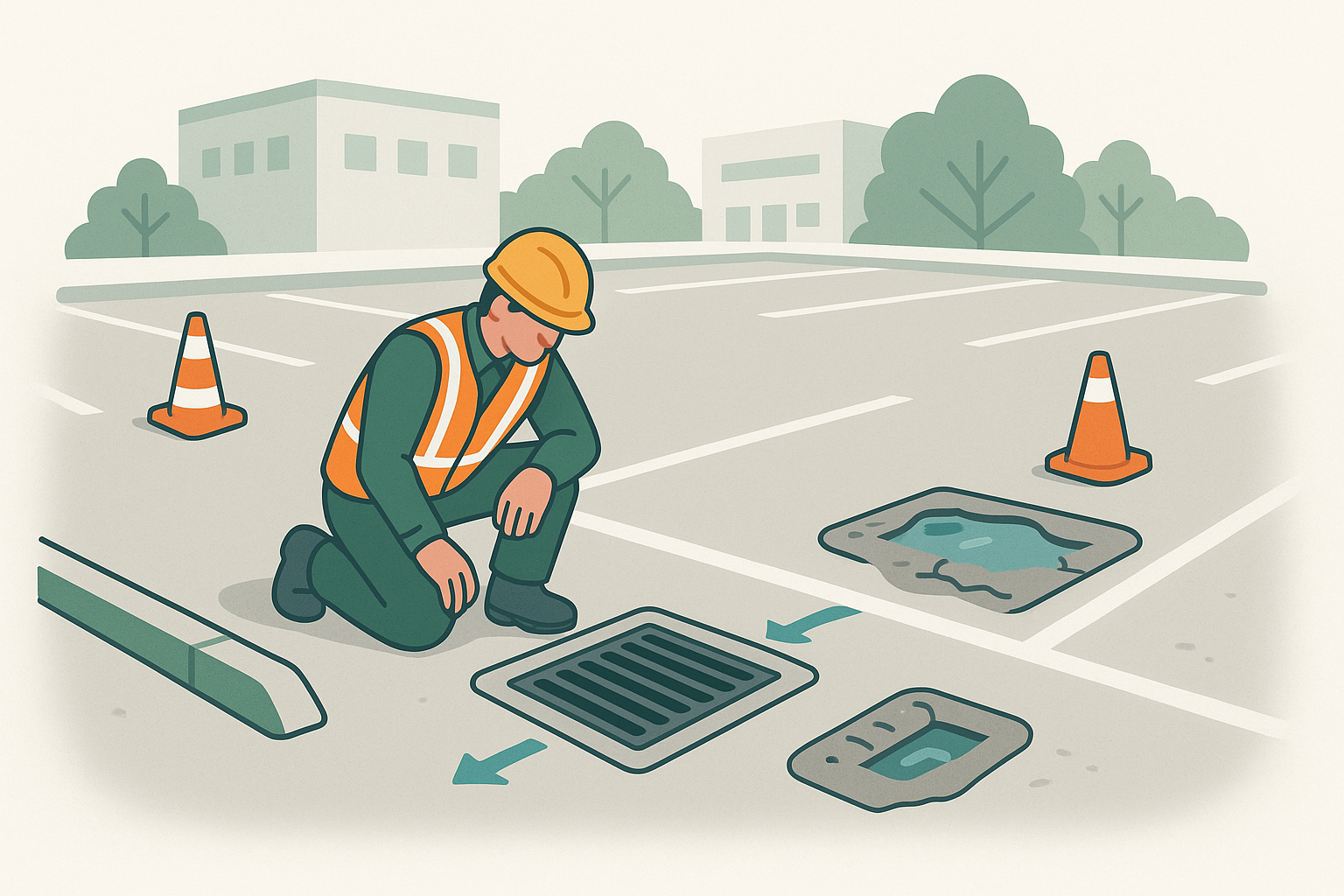
Parking lot storm drains are essential for keeping water runoff under control, preventing flooding, and maintaining the integrity of your pavement. Over time, debris, wear and tear, and weather conditions can compromise storm drains, leading to drainage failures that result in costly repairs. Tackling storm drain repair proactively ensures that your parking lot remains safe, functional, and compliant with local drainage regulations.
Table of Contents
Why Storm Drain Maintenance Matters
Poorly maintained storm drains can cause a ripple effect of problems, from pavement damage to safety hazards for pedestrians and vehicles. Understanding their role and the consequences of neglect can help property owners and facility managers prioritize proper maintenance and timely repairs.
The Role of Storm Drains in Parking Lot Drainage
Storm drains are designed to collect and channel rainwater away from paved surfaces, preventing water from pooling in low areas. When functioning properly, they:
- Direct water flow efficiently to underground drainage systems
- Prevent standing water that can lead to slippery conditions and surface degradation
- Reduce soil erosion around pavement edges and landscaping
- Protect asphalt and concrete longevity by minimizing prolonged water exposure
However, when storm drains become clogged or structurally compromised, water cannot properly drain, leading to a cascade of problems.
Common Consequences of Poor Drainage
Failing to maintain storm drains in a parking lot can lead to:
1. Accelerated Asphalt Deterioration
Water is one of the biggest culprits of asphalt damage. When storm drains are ineffective, excess water seeps into cracks, weakening the pavement structure. Over time, freeze-thaw cycles exacerbate this issue, leading to premature wear and tear.
2. Increased Potholes and Cracks
Standing water in areas with poor drainage contributes to pothole formation. As water infiltrates small cracks in the pavement, it erodes the base layer, causing larger structural failures. This creates safety hazards for vehicles and pedestrians, often leading to higher liability risks for property owners.
3. Water Pooling and Flood Risks
Blocked or broken storm drains cause water to accumulate in parking lots, leading to large puddles that pose slip-and-fall hazards. In severe cases, poor drainage can contribute to localized flooding, making certain areas of the parking lot unusable and driving away customers or tenants.
How Regular Inspections Prevent Expensive Repairs
Routine inspections and maintenance are the most effective ways to prevent major storm drain failures. Regular checks help:
- Identify early signs of clogging (leaves, trash, sediment buildup) before they become full blockages.
- Detect structural issues such as cracks in the drain grates or surrounding pavement.
- Ensure proper water flow by testing drainage after heavy rainfall.
- Reduce long-term costs by addressing minor issues before they escalate into expensive repairs or replacements.
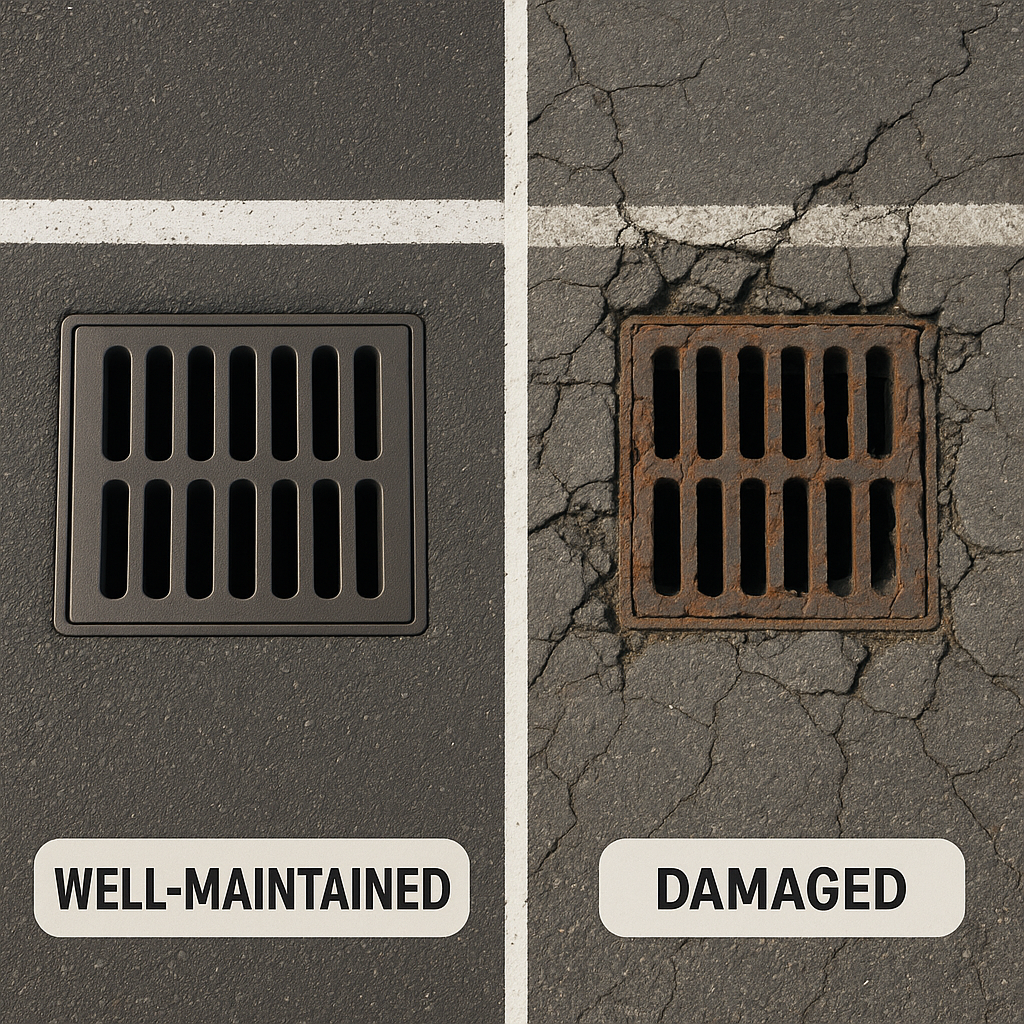
Recognizing Signs of Storm Drain Failure
Storm drains play a crucial role in keeping your parking lot dry and structurally sound. However, over time, they can develop issues that compromise their effectiveness. Recognizing the early signs of storm drain failure can help prevent costly repairs and avoid potential hazards. Below are the key indicators that your parking lot’s drainage system may need attention.
Surface-Level Indicators
Surface issues are often the first warning signs of a failing storm drain. These visible clues suggest that water is not draining properly:
- Standing water after rainfall – If puddles persist around storm drains for hours or days after a storm, the drain may be clogged or improperly graded.
- Visible sinkholes or cracks around the drain – When water erodes the soil beneath the pavement, it weakens the surrounding structure, leading to cracks and depressions in the asphalt or concrete.
Structural Signs
A compromised storm drain can lead to more significant structural damage, putting the integrity of your parking lot at risk:
- Collapsed drain grates – Over time, storm drain grates can corrode, crack, or shift due to heavy traffic, making them unsafe for vehicles and pedestrians.
- Soil erosion around the drainage system – If you notice soil washing away near the drain, it may indicate a problem with the underground drainage pipes, leading to instability in the pavement.
Functional Red Flags
In addition to visible issues, functional problems with the drainage system indicate an underlying failure:
- Slow water flow or total blockages – If water takes longer than usual to drain or does not drain at all, debris buildup, sediment accumulation, or structural damage may be obstructing the system.
- Unpleasant odors from the drain – A foul smell coming from the storm drain can indicate trapped organic matter, standing water, or even sewage backup in severe cases.
| Common Sign | Possible Cause | Implication |
| Standing water after rainfall | Clogged drain, inadequate slope, or damaged pipes | Flooding risks, increased pavement deterioration, and slip hazards |
| Visible sinkholes or cracks around the drain | Underground erosion, pipe failure, or weak pavement support | Structural instability, increased repair costs, and liability concerns |
| Collapsed drain grates | Heavy traffic damage, corrosion, or improper installation | Safety hazards for pedestrians and vehicles, increased water pooling |
| Soil erosion around the drainage system | Water washing away soil due to poor drainage system integrity | Foundation instability, pavement cracking, and long-term erosion |
| Slow water flow or total blockages | Debris buildup, tree root intrusion, or collapsed underground pipes | Recurring flooding, increased maintenance costs, and operational disruption |
| Unpleasant odours from the drain | Stagnant water, organic matter decay, or sewage backup | Health hazards, environmental contamination, and regulatory violations |
Assessing the Severity of Drain Damage
Once you’ve identified signs of storm drain failure, the next step is to assess the extent of the damage. Some issues can be resolved with simple maintenance, while others require professional intervention. Understanding the severity of the problem will help you make informed decisions about repairs, budgeting, and long-term drainage management.
When to Handle It Yourself vs. Call a Professional
Not all storm drain problems require hiring a contractor. Some minor issues can be fixed with basic tools, while more severe damage demands professional expertise.
DIY Repairs:
Clearing blockages – Use a drain snake or high-pressure water jet to remove debris buildup.
Sealing minor cracks – Small cracks around the drain can be patched with asphalt or concrete sealant.
Removing surface-level debris – Regularly cleaning grates and surrounding areas helps maintain proper drainage.
When to Call a Professional:
Severe structural damage – Large cracks, sinkholes, or collapsed drain grates require expert repair.
Underground pipe issues – If water backs up despite a clear drain, the issue may be deeper in the system.
Erosion or unstable pavement – If soil around the drain is washing away, a professional must assess and reinforce the area.
Using Drain Cameras for Internal Inspection
For issues beyond surface-level damage, a drain camera inspection is one of the best diagnostic tools. This involves inserting a waterproof camera into the drain system to identify blockages, cracks, or pipe collapses.
What a drain camera can detect:
- Clogs and debris accumulation in hard-to-reach areas
- Pipe misalignment or structural damage deep within the system
- Tree root intrusions that may require specialized removal
- Signs of corrosion or deterioration in older drainage infrastructure
A professional plumber or drainage specialist typically performs this inspection, but rental options exist for property managers or maintenance teams looking to assess the system independently.
Estimating Repair Costs Based on Damage Type
Storm drain repairs vary in cost depending on the severity of the issue. Here’s a rough estimate of what to expect:
| Type of Repair | Estimated Cost | DIY or Professional? |
| Basic debris removal | $100 – $300 | DIY |
| Minor crack sealing | $200 – $500 | DIY or professional |
| Drain grate replacement | $500 – $1,500 | Professional |
| Small sinkhole repair | $1,000 – $3,000 | Professional |
| Underground pipe repair | $3,000 – $7,000 | Professional |
| Full drain system replacement | $5,000 – $15,000+ | Professional |
By properly assessing the damage using visual inspection, drain cameras, and professional consultations, you can determine the best course of action and avoid unnecessary expenses.
Step-by-Step Guide to Storm Drain Repair
Repairing a storm drain in your parking lot requires a methodical approach to ensure proper water flow and long-term functionality. Whether dealing with minor blockages or significant structural damage, following these steps will help restore the drainage system effectively.
Step 1 – Clear Debris and Blockages
Before addressing structural damage, it’s essential to ensure that the drain is free of obstructions. Clogged storm drains can lead to standing water and flooding, making this the first step in any repair process.
Tools Needed:
Drain snake – Effective for breaking up small clogs and clearing out debris.
Hydro-jetting equipment – Uses high-pressure water to flush out sediment and stubborn blockages.
Protective gloves and safety goggles – Essential for handling debris safely.
Safe Methods for Clearing Minor Clogs:
- Remove visible debris – Use a rake or gloved hands to clear leaves, trash, and dirt from the grate.
- Use a drain snake – Insert and rotate it through the drain opening to break apart minor blockages.
- Hydro-jetting for deeper clogs – Direct a high-pressure water jet into the drain to remove accumulated sediment.
Pro Tip: After clearing the blockage, pour water into the drain to test its flow before moving to the next step.
Step 2 – Assess and Repair Structural Damage
Once the drain is clear, inspect for visible cracks, erosion, or damage to the surrounding pavement. Addressing these issues promptly can prevent more significant problems in the future.
Fixing Minor Cracks with Sealant
- Clean the damaged area thoroughly to remove dirt and moisture.
- Apply asphalt or concrete crack sealant using a caulking gun.
- Smooth the sealant with a trowel and allow it to cure completely before reopening the area to traffic.
Addressing Significant Structural Issues
If the drain grate is damaged or the frame has shifted, it may need to be replaced:
- Remove the broken drain grate using a crowbar.
- Install a new heavy-duty storm drain grate suited for parking lot traffic.
- If the surrounding concrete or asphalt has deteriorated, it may need full replacement rather than patching.
Pro Tip: If erosion around the drain is extensive, consult a drainage specialist before attempting further repairs.
Step 3 – Reinforce Surrounding Asphalt or Concrete
After repairing or replacing the drain, reinforcing the surrounding pavement ensures long-term stability and prevents future issues.
Properly Filling Sinkholes Around the Drain
- Remove loose debris and compact the soil underneath the affected area.
- Fill the sinkhole with a high-quality asphalt or concrete mix, ensuring a firm base.
- Compact the material and allow it to set completely before reopening to traffic.
Regrading the Area to Ensure Proper Water Flow
- Adjust the slope around the drain to redirect water efficiently toward the storm drain.
- Use a leveling tool and asphalt overlay to correct any low spots where water may pool.
- Ensure a smooth transition from the parking lot surface to the drain opening to prevent trip hazards.
Preventative Measures for Long-Term Drain Performance
Proper maintenance of your parking lot’s storm drain system is essential for preventing costly repairs and ensuring long-term functionality. By implementing a consistent inspection schedule and optimizing drainage design, you can extend the life of your stormwater infrastructure while minimizing the risk of flooding and pavement damage.
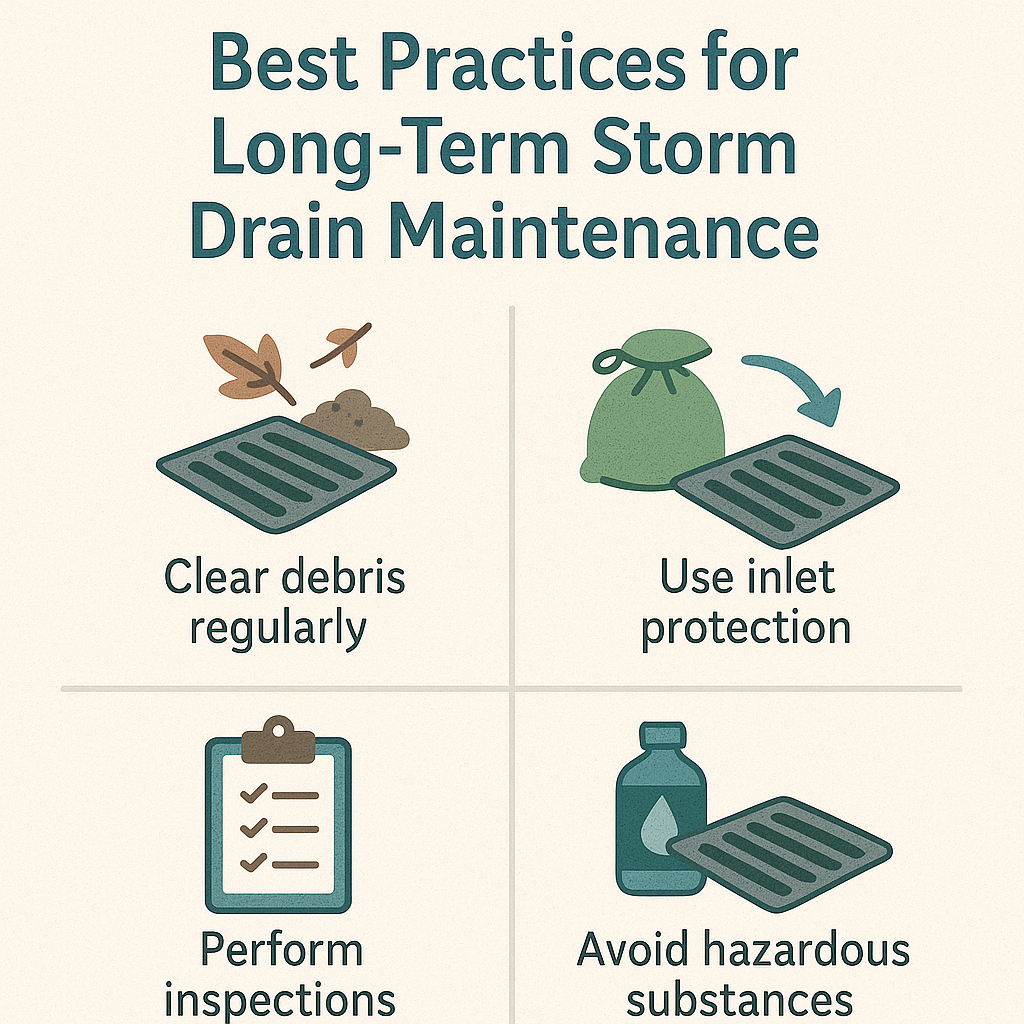
Scheduled Inspections and Cleaning
Regular maintenance is the key to preventing clogs and structural failures. A proactive approach helps identify minor issues before they escalate into major drainage problems.
Monthly Debris Removal Checklist
Clear leaves, trash, and sediment from the drain grate.
Inspect for visible cracks, rust, or displacement of the grate.
Pour water into the drain to ensure smooth flow.
Check for standing water around the drain after rainfall.
Remove weeds or plant growth near the storm drain.
Seasonal Maintenance Guide
- Spring: Remove accumulated winter debris and check for damage from freeze-thaw cycles.
- Summer: Ensure that storm drains are clear before heavy summer rains. Look for erosion or pavement shifting.
- Fall: Conduct thorough leaf removal and check for early signs of blockages.
- Winter: Monitor drains for ice buildup and ensure water is draining properly to prevent dangerous freeze patches.
Pro Tip: Keeping a maintenance log can help track recurring issues and determine if professional intervention is needed.
Implementing Proper Drainage Design
In addition to routine cleaning, optimizing the design of your parking lot’s drainage system enhances performance and reduces long-term maintenance needs.
Slope Adjustments for Better Water Flow
- Ensure that the parking lot has a gradual slope directing water toward storm drains.
- Regrade any low spots where water tends to pool.
- Use asphalt overlays to correct minor slope issues without requiring full repaving.
Best Materials for Parking Lot Drainage Longevity
- Heavy-duty cast iron drain grates – Durable and resistant to wear from high traffic.
- Permeable pavement – Allows water to filter through, reducing surface runoff.
- Reinforced concrete drain surrounds – Prevents erosion and structural failures.
Cost Considerations and Budgeting for Repairs
Storm drain repairs can range from minor fixes to large-scale infrastructure replacements, and the costs involved can vary significantly. By understanding what factors influence pricing and how to budget efficiently, property owners can make informed decisions that balance cost and long-term effectiveness.
Factors That Affect Storm Drain Repair Costs
Several factors impact the overall cost of repairing a storm drain in a parking lot. Identifying these elements early can help you anticipate expenses and plan accordingly.
1. Drain Location and Accessibility
- Drains in high-traffic areas often require more expensive reinforced materials to withstand vehicle load.
- If a drain is located in a hard-to-reach spot, such as a busy parking lot or near landscaping, labor costs may increase.
- Urban areas with strict local regulations may require additional permits or specialized contractors, increasing costs.
2. Severity of Structural Damage
- Minor surface cracks can often be sealed for a few hundred dollars, while significant pavement failure may require full-depth replacement costing thousands.
- If the underlying drain pipes are damaged or collapsed, excavation and replacement will substantially increase the cost.
- If water erosion has compromised the soil around the drain, additional stabilization measures such as gravel backfilling or concrete reinforcement may be needed.
Pro Tip: Always get a drain camera inspection before committing to major repairs to ensure you’re addressing the root cause of the problem.
Budget-Friendly Repair Options
While storm drain repairs can be costly, strategic budgeting and cost-effective solutions can help reduce expenses without compromising quality.
DIY Fixes for Minor Issues
- Regularly cleaning debris from storm drains to prevent costly clogs.
- Using sealants for small cracks before they expand.
- Regrading minor surface irregularities with asphalt overlays instead of full pavement replacement.
Preventative Maintenance Over Costly Repairs
- Investing in a scheduled cleaning and inspection plan (quarterly or biannually) can help detect issues early before they escalate.
- Applying a protective coating around the drain to prevent erosion.
- Installing drain guards or filters to reduce sediment buildup and extend drain lifespan.
Choosing the Right Materials for Long-Term Savings
- Reinforced concrete instead of standard asphalt for high-traffic areas.
- Permeable paving solutions to improve drainage and minimize maintenance costs.
- Durable cast iron grates to withstand wear and tear from heavy vehicles.
When It’s More Cost-Effective to Replace Rather Than Repair
In some cases, attempting repeated repairs may cost more over time than a full replacement. Here’s when replacement is the better option:
Severe Drainage Failure:
- If water backs up regularly despite frequent repairs, the entire system may be failing.
- Drain collapses or misaligned underground pipes may indicate that a partial or full replacement is necessary.
Recurring Structural Damage:
- If cracks, potholes, or pavement failures continue despite multiple repairs, the surrounding foundation may be compromised.
- Frequent repair costs can add up, making a one-time investment in a long-term solution more practical.
Compliance and Safety Issues:
- If local codes have changed, upgrading to compliant stormwater management systems may be required.
- If failing drains create liability risks due to flooding or unstable pavement, replacement may reduce legal exposure.
Compliance and Environmental Considerations
Storm drain repairs in parking lots must align with local regulations and environmental best practices to ensure compliance and sustainability. Proper stormwater management not only prevents flooding and property damage but also protects local water systems from contamination.
Local Stormwater Drainage Regulations
Before undertaking any storm drain repairs or modifications, it’s essential to check your area’s stormwater drainage regulations. These rules are designed to ensure that runoff is properly managed and does not contribute to pollution, erosion, or flooding in surrounding areas.
Key compliance factors to consider:
- Permit requirements: Many municipalities require permits for storm drain repairs, especially if excavation or structural modifications are involved.
- Runoff management standards: Regulations often specify how stormwater should be collected, filtered, and discharged to minimize environmental impact.
- Oil and sediment filtration mandates: Certain areas prohibit direct stormwater runoff into public sewers and may require filtration systems or oil-water separators.
- Drainage system capacity rules: Some jurisdictions set minimum drainage capacities to prevent localized flooding and overloading of public stormwater systems.
- Inspection requirements: Post-repair inspections may be required to confirm compliance with drainage and environmental standards.
Pro Tip: Contact your local environmental agency or public works department to ensure your repair plan meets all necessary regulations.
Eco-Friendly Drain Repair Options
Sustainable stormwater management helps reduce environmental impact while improving long-term drainage efficiency. Consider the following eco-friendly repair solutions when upgrading or maintaining your parking lot’s storm drain system.
Permeable Pavement Alternatives
Permeable surfaces allow water to filter through instead of creating runoff, reducing strain on storm drains and improving groundwater recharge.
Permeable interlocking concrete pavers – Water flows through gaps between pavers, reducing surface runoff.
Porous asphalt – Functions like standard asphalt but allows rainwater to drain through small openings into the ground.
Permeable concrete – Designed with tiny voids that enable natural water infiltration, preventing pooling.
Benefits of Permeable Pavement:
- Reduces standing water and flooding in parking lots.
- Minimizes erosion and structural damage from excessive runoff.
- Complies with green infrastructure initiatives and stormwater permits in many cities.
Green Infrastructure Solutions for Water Management
Modern stormwater management focuses on mimicking natural processes to handle runoff efficiently while improving environmental sustainability.
Green infrastructure techniques to integrate with storm drains:
- Bioswales and rain gardens: Shallow, landscaped areas that capture and filter stormwater naturally before it enters the drain.
- Vegetative filter strips: Planted grass or shrubs near storm drains to absorb excess water and filter out debris.
- Underground retention systems: Subsurface storage tanks that temporarily hold stormwater to slow its release into public systems.
- Oil and sediment traps: Specialized filtration devices that prevent contaminants from reaching water sources.
Future-Proofing Your Drainage System: Many cities are offering incentives and rebates for implementing green stormwater solutions—check if your municipality provides funding for eco-friendly improvements.
Choosing the Right Contractor for Storm Drain Repairs
Selecting a qualified contractor for storm drain repairs is crucial to ensuring the job is done efficiently, within budget, and in compliance with local drainage regulations. A poorly executed repair can lead to costly rework, ongoing drainage issues, and potential legal liabilities. Below, we’ll outline the key qualifications to look for, essential questions to ask, and how to compare contractor bids to get the best value.
Key Qualifications to Look For
A reliable storm drain repair contractor should have the expertise, certifications, and experience necessary to handle your project. Here’s what to check:
Stormwater System Experience – Look for contractors with a proven track record in repairing storm drains, parking lot drainage systems, and underground stormwater infrastructure.
Proper Licensing and Insurance – Verify that the contractor is licensed and insured to perform storm drain work in your area. This includes:
- A valid business license for your jurisdiction.
- Liability insurance to cover property damage.
- Workers’ compensation insurance to protect against injuries on-site.
Knowledge of Local Drainage Regulations – The contractor should be familiar with municipal stormwater codes and environmental requirements to ensure compliance.
High-Quality Equipment and Materials – A professional contractor should use durable materials (e.g., cast iron grates, reinforced concrete) and specialized tools (e.g., drain cameras, hydro-excavators) to ensure long-term repairs.
Positive Customer Reviews and References – Check online reviews, testimonials, and previous project portfolios to gauge their reputation. Ask for references from past clients who had similar repairs done.
Questions to Ask Before Hiring
Before signing a contract, ask these essential questions to assess a contractor’s capabilities, pricing, and work guarantees:
What is your experience with storm drain repairs in commercial parking lots?
- Ensures they have hands-on knowledge in your specific type of repair.
Can you provide references or case studies from similar projects?
- Helps verify the quality of their previous work.
Do you offer a written estimate and project timeline?
- Ensures transparency in pricing and prevents unexpected delays.
How will you ensure compliance with local stormwater regulations?
- Confirms their understanding of drainage codes and environmental requirements.
What materials and methods will you use for repairs?
- Determines if they use high-quality, long-lasting solutions instead of short-term fixes.
Do you offer any warranties or guarantees on your work?
- A reputable contractor should stand behind their repairs and provide a warranty period for workmanship and materials.
How will you handle unexpected issues or cost overruns?
- Clarifies how they manage budget adjustments and unforeseen challenges.
Comparing Bids for the Best Value
Once you’ve gathered estimates from multiple contractors, comparing them effectively ensures you’re getting the best balance of cost, quality, and reliability.
What to Look for in a Bid:
- Detailed Scope of Work – The bid should clearly outline the repair process, materials used, labor costs, and project timeline.
- Transparent Pricing – Look for itemized costs rather than lump-sum estimates to avoid hidden fees.
- Warranty and Post-Repair Support – Check if the contractor guarantees their work and offers follow-up inspections.
- Estimated Completion Time – Delays can lead to operational disruptions, so ensure the timeline aligns with your needs.
Red Flags to Watch Out For:
Extremely Low Bids – If one contractor’s bid is significantly lower than others, it may indicate subpar materials, hidden fees, or inexperience.
Vague or Unspecified Work Plans – If a bid lacks detailed repair steps or estimated materials, it could lead to unexpected changes and cost overruns.
Lack of Proper Licensing or Insurance – Contractors who cannot provide proof of their credentials should be avoided.
Common Mistakes to Avoid During Storm Drain Repair
Storm drain repair requires precision, proper planning, and high-quality materials to ensure long-term effectiveness. Unfortunately, many property owners and contractors make avoidable mistakes that lead to recurring drainage issues, increased costs, and premature failures. Below are the most common errors to watch out for and how to prevent them.
Ignoring Early Warning Signs
One of the biggest mistakes property owners make is delaying repairs until the problem becomes severe. Addressing minor issues early can save thousands of dollars in repair costs and prevent major disruptions to your parking lot.
Signs You Shouldn’t Ignore:
- Ponding water around the drain – Indicates a clogged or undersized drainage system.
- Cracks or erosion near the storm drain – Could signal underground pipe failure or soil instability.
- Slow drainage or backups – A sign of blockages that, if left unchecked, may require costly excavation.
- Shifting or sunken drain grates – Often a result of unstable pavement, which can worsen if ignored.
Pro Tip: Conduct regular storm drain inspections and take action at the first sign of deterioration to avoid expensive repairs.
Using the Wrong Repair Materials
Selecting substandard materials or incompatible repair solutions can lead to premature failure and higher maintenance costs. To ensure durability, always use materials suited for high-traffic parking lots and heavy water flow.
Common Material Mistakes:
Using basic asphalt patching instead of reinforced concrete – Asphalt is prone to erosion and water infiltration, leading to repeated failures.
Choosing plastic grates over heavy-duty cast iron – Plastic grates may be cheaper but crack under vehicle weight, leading to safety hazards.
Skipping corrosion-resistant coatings – Without proper protection, drain components can rust, reducing their lifespan.
Ignoring sealants for small cracks – Unsealed cracks allow water infiltration, worsening pavement damage over time.
Best Material Choices for Storm Drain Repairs:
- Cast iron or reinforced steel grates – Long-lasting and able to withstand heavy traffic.
- High-strength concrete for surrounding pavement – Prevents shifting and erosion.
- Waterproof sealants for minor crack repairs – Protects against moisture infiltration.
- Geo-textile fabric for soil stabilization – Prevents erosion around the drain system.
Pro Tip: Always use commercial-grade drainage materials and consult a professional for the right repair solutions for your parking lot.
Neglecting Future Drainage Planning
A common but costly mistake is focusing only on immediate repairs without considering long-term drainage performance. Poor planning can lead to repeat repairs, flooding issues, and additional pavement damage.
Key Drainage Planning Considerations:
- Is the current storm drain properly sized? – If your parking lot experiences frequent flooding, you may need a larger drain capacity.
- Are there proper slope adjustments? – Water should naturally flow toward drains without pooling. Regrading may be necessary in areas where water collects.
- Should additional drains be installed? – Large parking lots may require multiple storm drains to manage runoff effectively.
- Is the drainage system designed for extreme weather? – Climate patterns are shifting, and future-proofing your drainage against heavy rainfall is critical.
Solutions for Better Long-Term Drainage:
- Upgrade to a higher-capacity drainage system if recurring flooding is an issue.
- Implement permeable pavement in high-water flow areas to reduce runoff pressure on storm drains.
- Schedule regular maintenance inspections to catch issues before they become costly problems.
Pro Tip: Work with a stormwater management expert to ensure your repairs align with long-term drainage efficiency and compliance regulations.
Conclusion
Proper storm drain maintenance and timely repairs are essential for preventing flooding, asphalt deterioration, and costly structural damage in parking lots. By understanding early warning signs, using the right repair materials, and implementing a long-term drainage plan, property owners can extend the lifespan of their stormwater systems while ensuring compliance with local regulations.
Key takeaways from this guide:
Regular inspections and maintenance prevent expensive repairs.
Clearing debris and fixing small cracks early can stop major drainage failures.
Using high-quality materials and proper repair techniques ensures durability.
Planning for future drainage needs reduces long-term costs and environmental impact.
FAQs
1. How often should I inspect my parking lot’s storm drains?
Storm drains should be inspected at least once per quarter, with additional checks after heavy rainfall, snowmelt, or major storms. Regular cleaning and minor repairs can prevent costly drainage failures.
2. What’s the quickest way to clear a blocked storm drain?
For minor clogs, use a drain snake or hydro-jetting equipment to remove debris and sediment. If the blockage is severe, a professional drain camera inspection may be needed to identify deeper obstructions.
3. How can I tell if my storm drain needs full replacement?
If your storm drain has severe structural damage, collapsed pipes, recurring flooding, or visible erosion around the drain, a full replacement may be more cost-effective than repeated repairs. A professional inspection can confirm whether repair or replacement is the best option.
4. Can I prevent storm drain clogs with regular maintenance?
Yes! A monthly debris removal checklist, along with seasonal maintenance, can prevent blockages. Installing drain filters and grates also helps keep leaves, trash, and sediment from entering the drainage system.
5. Are there any eco-friendly storm drain repair options?
Yes! Sustainable solutions include:
Permeable pavement alternatives – Allows water to filter through, reducing runoff.
Bioswales and rain gardens – Naturally filter stormwater before it enters the drain.
Eco-friendly drainage materials – Using reinforced concrete, geo-textile fabrics, and green infrastructure can improve sustainability.