
Why an Unleveled Parking Lot Is More Serious Than It Looks
An unleveled parking lot is more than an inconvenience.
Table of Contents
Uneven slabs, sunken sections, dips, and heaved areas can quietly turn your property into a safety risk, a drainage problem, and a liability issue. Left alone, those “small low spots” often lead to costly structural repairs and unhappy tenants, customers, or residents.
For property managers in Metro Vancouver, where rain and freeze-thaw cycles are constant, an uneven parking surface accelerates damage even faster.
This guide breaks down the hidden dangers of an unleveled parking lot and shows you how proactive repairs and maintenance can protect your visitors, your budget, and your reputation.
What Counts as an “Unleveled” Parking Lot?
An unleveled parking lot is any paved area where the surface is no longer flat and properly sloped. That includes:
- Sunken or depressed areas that collect water
- Heaved slabs or raised patches around roots, drains, or utility trenches
- Ruts and wheel paths where heavy vehicles consistently travel
- Uneven transitions between concrete and asphalt, ramps, or entrances
Common signs you may have a levelling issue
Look for:
- Puddles that remain long after rain stops
- Cars that rock or scrape when entering or exiting
- Visible height differences between stalls or lanes
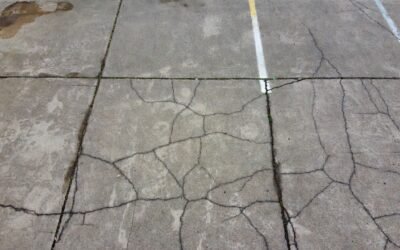
- Cracks that “step” up or down instead of staying flat
- Doors, carts, or wheelchairs struggling to roll smoothly
If you see several of these together, your lot is not just worn. It is likely out of level in ways that can cause damage and risk.
Safety Risks: How Uneven Surfaces Put People in Danger

1. Trip and fall hazards
Uneven surfaces are one of the leading causes of slips, trips, and falls in parking areas.
Even a small height difference can cause:
- Pedestrians to catch a toe on a raised edge
- Mobility devices to stop suddenly at a lip
- Strollers and carts to veer or tip
High-risk areas include:
- Transitions between walkways and stalls
- Around drains, trench covers, and patched areas
- Near accessible parking spaces and ramps
Beyond the human cost, a serious fall can turn into a claim against your building, strata, or business.
2. Vehicle damage and complaints
Unleveled parking lots are hard on vehicles. Drivers may experience:
- Scraped bumpers or undercarriages at severe dips or humps
- Tire damage where edges and voids are exposed
- Alignment issues from repeatedly hitting uneven spots
These issues can lead to:
- Formal complaints from tenants and visitors
- Poor online reviews mentioning your parking
- Increased pressure on you to “fix the lot now”
3. Emergency access problems
Emergency vehicles, delivery trucks, and maintenance vehicles need predictable, safe surfaces.
Unleveled areas can:
- Slow response time when vehicles must navigate around hazards
- Obstruct direct access to doors, loading zones, or hydrants
- Increase the chance of equipment damage during an emergency
In a crisis, the last thing you want is an ambulance or fire truck forced to avoid your worst dips and ruts.
Hidden Structural and Drainage Damage
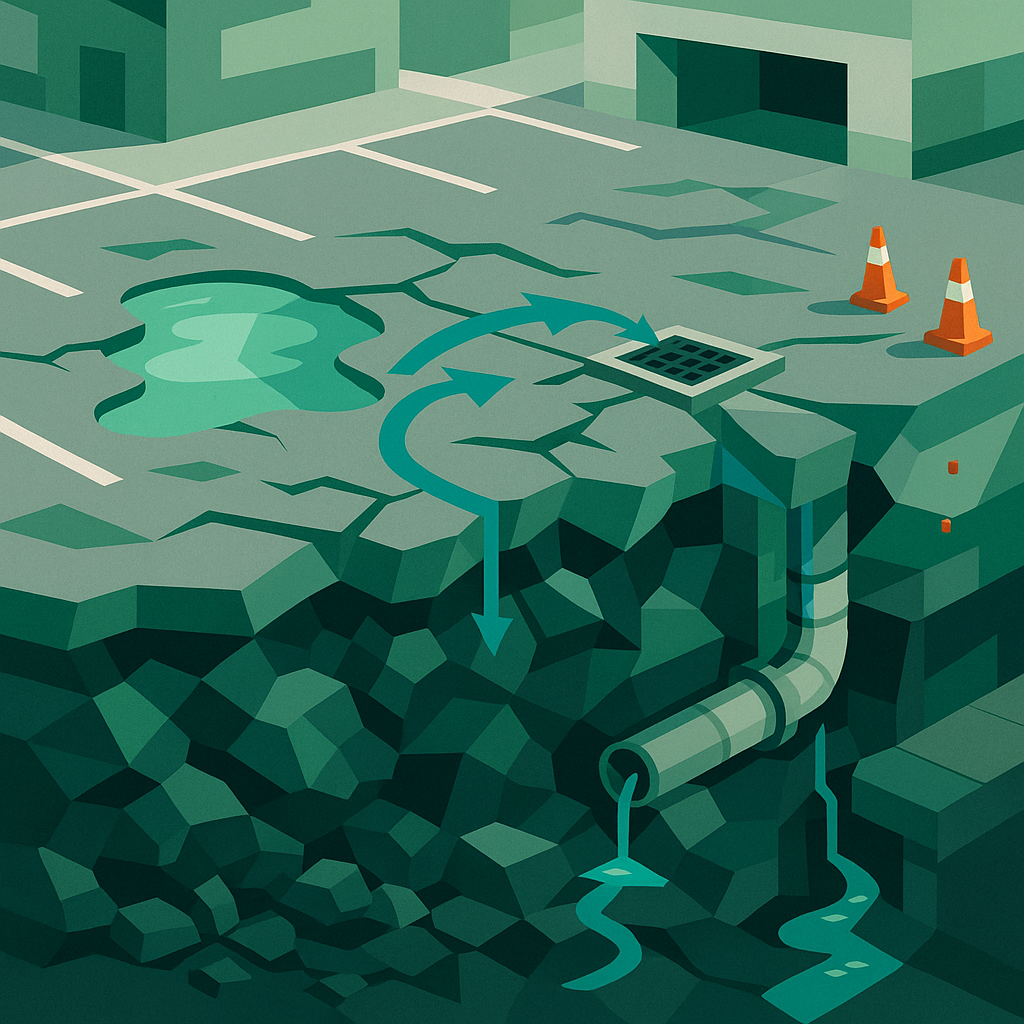
Uneven surfaces rarely exist in isolation. They are usually a symptom of a deeper problem in the foundation, drainage, or structure beneath your lot.
1. Poor drainage and chronic ponding
When a parking lot is properly graded, water flows to drains, catch basins, or swales. When the surface settles or heaves, that flow is interrupted. You see:
- Puddles that never drain fully
- “Bird baths” around catch basins where the grate is higher than the surrounding surface
- Water flowing toward building entrances or low walls instead of toward drains
Chronic ponding can lead to:
- Surface breakdown and pothole formation
- Slippery algae growth and winter ice sheets
- Water infiltration into joints, edges, and expansion gaps
In Metro Vancouver’s climate, those low spots stay wet for long periods, accelerating every form of damage.
2. Subbase erosion and voids
If water is sitting where it should not, it is likely going where it should not. Standing water often finds a path down into the base and subgrade. Over time this can:
- Wash fines out of the base material and create voids
- Undermine the support under asphalt or concrete
- Lead to more sinking and cracking as traffic passes over weakened sections
The result is a vicious cycle. Unlevel areas collect water. Water weakens the base. The surface sinks even more, and the area becomes a serious structural defect instead of a cosmetic issue.
3. Damage to drains, catch basins, and grates
When sections of the lot settle around a drain or catch basin, you get mismatched heights. This can:
- Crack the concrete collars around the basin
- Stress drain grates and frames
- Allow water to bypass the basin entirely and find new paths
Over time, this can contribute to clogged drainage systems, backups, and even flooding inside lower-level parkades if water finds its way to the building.
Financial and Legal Liabilities
1. Increased slip and fall liability
If someone is injured due to an obvious surface defect you knew about or should have known about, you may be exposed to a negligence claim.
Uneven surfaces can be considered:
- A failure to maintain safe common areas
- A predictable risk that required repair or mitigation
- A sign that regular inspections and maintenance are lacking
Insurance may respond, but repeated incidents can raise premiums or deductibles. In some cases the insurer may even require repairs as a condition of ongoing coverage.
2. Accessibility and code compliance issues
Unleveled parking lots often create slope and transition problems around accessible stalls, ramps, and building entries.
You may see:
- Cross slopes that exceed accessibility guidelines
- Sudden lips, gaps, or height differences at ramps and curb cuts
- Accessible spaces that hold water or ice in winter
These can affect compliance with local building codes and accessibility standards, as well as your responsibility to provide equitable access to tenants and customers with disabilities.
3. Premature capital expenses
Ignoring an out-of-level parking lot almost always increases the eventual cost to fix it.
Small early interventions like localized slab levelling, patching, or drainage corrections are far less expensive than:
- Full-depth reclamation
- Complete resurfacing or reconstruction
- Emergency repairs after flooding or major failures
A neglected surface often shortens the overall life of the lot by several years, forcing you into capital projects earlier than planned.
Customer Experience and Reputation
Your parking lot is often the first physical experience someone has with your property. An unleveled lot sends the wrong message:
- It looks neglected and unprofessional
- It makes navigation stressful for drivers
- It worries visitors about slipping, falling, or damaging their vehicles
For retail plazas, hospitals, hotels, strata complexes, and public buildings, a rough or uneven lot can directly affect how safe and well-managed people feel on your site.
Why Parking Lots Become Unleveled
Understanding the causes helps you choose the right fix.
1. Poor original construction
Common construction issues include:
- Inadequate compaction of base and subgrade
- Thin asphalt or concrete that cannot handle design loads
- Poorly planned slopes that never drained correctly
These problems often show up a few years after the lot goes into service.
2. Heavy traffic and loading
Parking lots that frequently handle:
- Delivery trucks
- Garbage and recycling trucks
- Construction equipment
will experience deeper ruts and faster settlement, especially in turning or loading zones.
3. Drainage failures
Clogged or failing drains and catch basins cause local flooding and softening of the base. Over time this leads to:
- Depressed areas around catch basins
- Sinking near trench drains or utility lines
- Surface cracking where water stays too long
4. Freeze-thaw cycles
Water that enters cracks or joints expands when it freezes. That expansion can:
- Lift slabs and create heaving
- Widen cracks and let more water in
- Break down edges around drains, grates, and steps
In climates that fluctuate around freezing, this process can repeat dozens of times per winter.
5. Tree roots and underground movement
Nearby trees and utility trenches create their own levelling problems:
- Roots push up slabs and curbs
- Backfilled trenches settle over time
- Voids form around buried pipes and structures
How to Tell If Your Parking Lot Is Becoming Unleveled
You do not need specialist tools to spot early warning signs. A structured walk-through a few times a year can help.
A simple self-assessment checklist
Walk your lot and look for:
- Puddles or wet areas that remain long after rain
- Cracks that look like steps or different “layers” of movement
- Height differences where vehicles enter from the street
- Wavy line markings that show the surface has shifted
- Doors, carts, or wheelchairs struggling to roll smoothly
Basic tests property teams can use
- Ball or water test: After rain or washing, note where water sits or where a small ball rolls and stops.
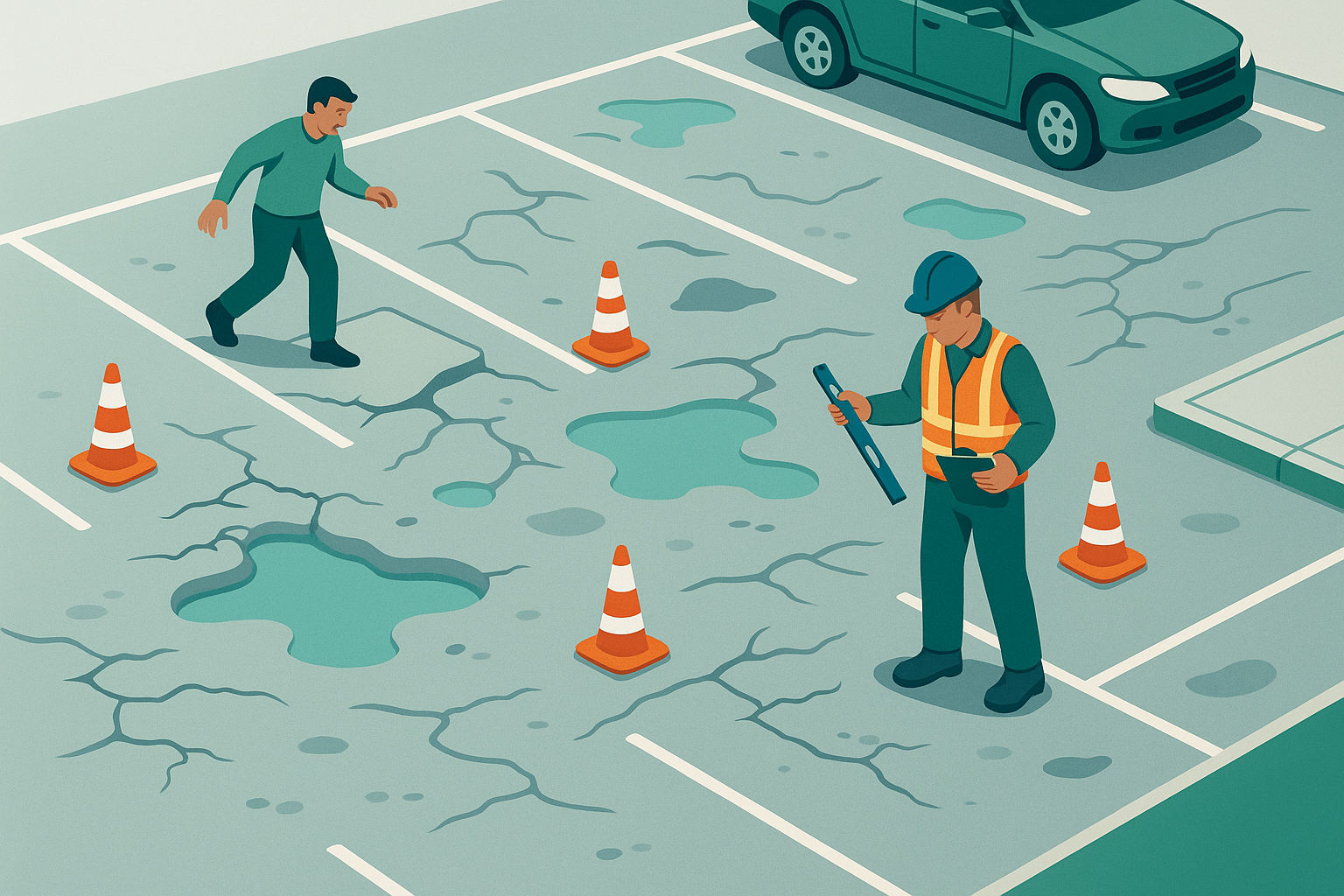
- Straightedge test: Lay a long straight board or level across suspect areas to see how much daylight is underneath.
- Photo documentation: Take photos of problem spots every 6 to 12 months to track changes.
If certain areas are clearly getting worse, it is time to involve a professional contractor or engineer.
Repair Options for Unleveled Parking Lots
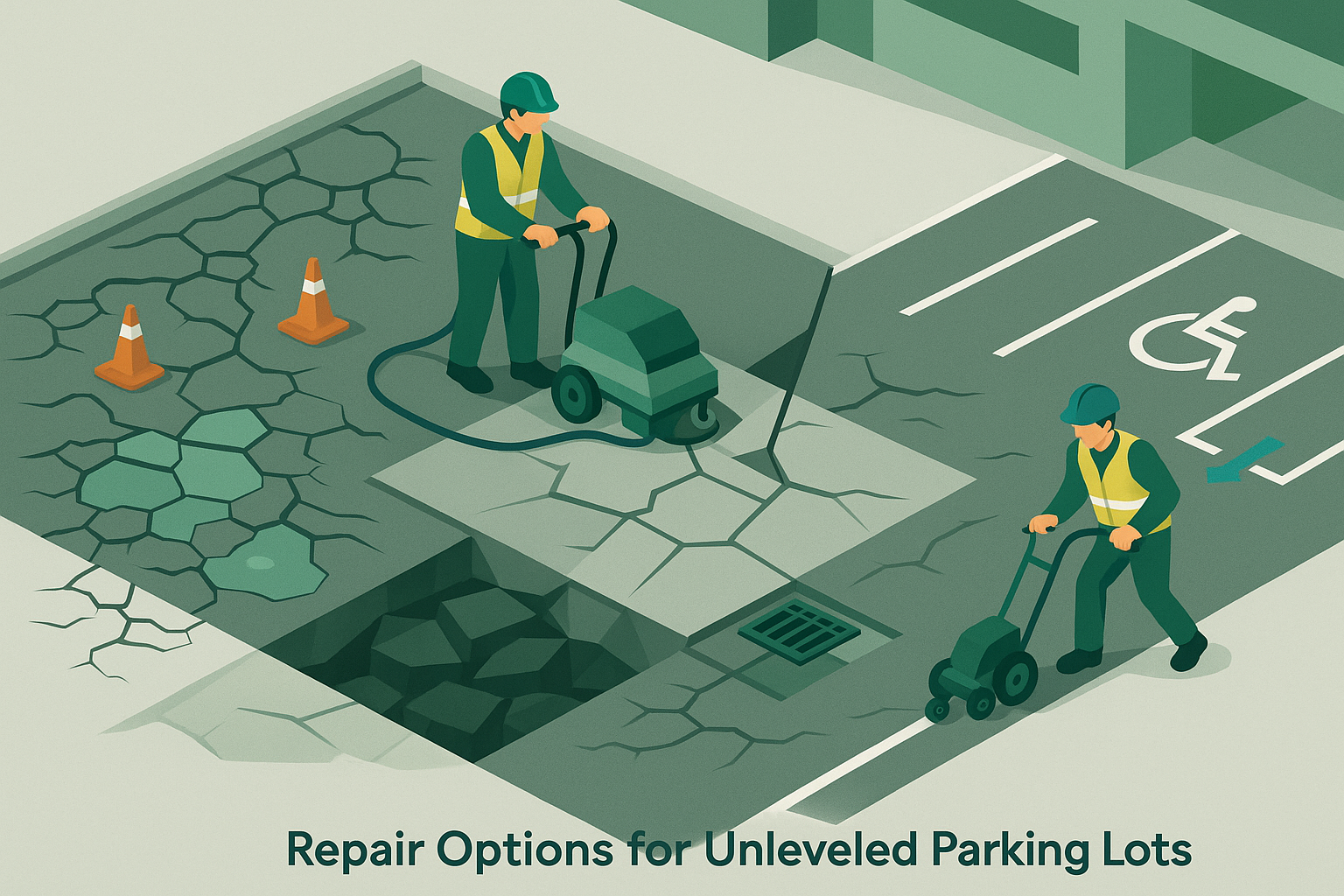
The right approach depends on the severity and cause of the problem. In many cases, you can combine surface repairs with drainage and maintenance improvements to extend the life of your lot.
1. Localized asphalt or concrete repair
For small, defined areas:
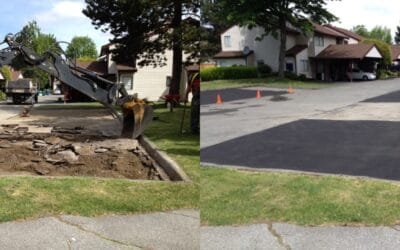
- Asphalt patching or milling and overlay: Remove damaged asphalt, repair the base, and place new asphalt to restore correct elevation and slope.
- Concrete panel replacement: Cut and replace individual slabs that have settled, heaved, or broken beyond repair.
These targeted repairs are ideal for trip hazards at:
- Entrances
- Accessible stalls
- Drainage low spots
Parking lot and parkade concrete and asphalt repair are core services that experienced contractors in Greater Vancouver provide for commercial plazas, strata buildings, hospitals, and more.
2. Slab levelling and lifting
Where the base is mostly intact, but settlement has created dips, slab levelling can lift and support the existing pavement. Techniques may include:
- Injecting material beneath a slab to raise it
- Filling voids to stabilize slabs and reduce future movement
- Reestablishing proper flow toward drains and catch basins
This approach can be particularly useful in parkades and concrete parking decks where replacing large areas is disruptive.
3. Drainage corrections and catch basin repairs
Addressing the drainage system is critical to preventing future levelling issues. Work here might include:
- Cleaning and vacuuming catch basins and sumps
- Hydro jetting drains and lines to restore flow
- Adjusting or rebuilding concrete collars around basins
- Regrading surfaces to direct water into drains rather than away from them
In the Lower Mainland, regular hydro jet drain cleaning and vac truck services are recommended to keep water flowing and protect both surfaces and underground systems.
4. Crack sealing and surface sealing
Once levelling issues are corrected, sealing is a powerful way to slow down future deterioration:
- Crack sealing: Keeps water out of the base and reduces freeze-thaw damage.
- Seal coating or surface sealing: Protects asphalt or concrete from moisture, chemicals, and wear.
These treatments extend the life of your repairs and help your lot stay level longer.
5. Re-striping and accessibility upgrades
After repairs, it is important to:
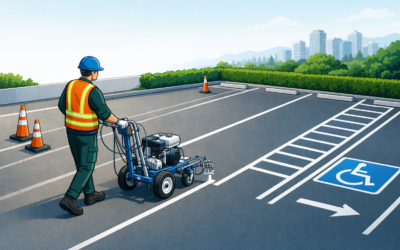
- Repaint stall lines, directional arrows, and accessible stalls
- Confirm slopes and transitions meet accessibility best practices
- Highlight key routes and hazard zones with clear markings and signage
A freshly repaired and restriped lot not only functions better, it also looks cared for and professional.
Preventive Maintenance: Keeping Your Lot Level Over Time
An unleveled parking lot is much easier to prevent than to fix after major failures. Build levelling into your ongoing maintenance plan.
Create a regular inspection schedule
Aim for at least:
- Quarterly visual inspections for settlement, ponding, and new cracks
- Seasonal checks before and after winter for freeze-thaw damage
- Post-storm reviews after heavy rain that may stress drains and basins
Document each inspection with notes and photos to track trends.
Maintain drainage systems proactively
A clean drainage system supports a level surface. Good habits include:
- Clearing leaves, litter, and debris from grates and inlets
- Scheduling periodic hydro jetting of drain lines
- Using vac trucks to remove sediment and sludge from catch basins and sumps
These steps reduce the chance that water will back up, overflow, and undermine your base materials.
Address minor defects early
Do not wait until issues are “big enough to worry about.” Small interventions like:
- Filling isolated potholes
- Sealing cracks
- Repairing small heaves or depressions
can prevent those areas from turning into major tripping hazards or structural problems.
Combine cleaning with inspection
Regular power sweeping, power scrubbing, and pressure washing keep surfaces clean and make defects easier to spot. Dirt and debris often hide early signs of settlement and cracking.
Why Partner With a Professional Parking Lot Contractor
Managing a parking lot or parkade is complex. You are balancing safety, budgets, and tenant expectations, all while keeping disruption low.
A professional parking maintenance contractor with experience across parkade cleaning, asphalt repair, concrete repair, drain cleaning, and line painting can:
- Diagnose the real cause of levelling problems
- Recommend the most cost-effective repairs for your situation
- Plan work during off-peak hours to minimize disruption
- Build a long-term maintenance schedule that protects your investment
In Greater Vancouver and the Lower Mainland, that means understanding local weather, typical construction methods, and drainage demands for dense urban sites.
If you’re in the Metro Vancouver area and require parking lot maintenance, reach out to City Wide.
Bringing It All Together: Turn “Hidden” Dangers Into Visible Improvements
An unleveled parking lot is not just a cosmetic issue. It is a web of safety, structural, drainage, financial, and reputational risks that grow quietly the longer you ignore them.
By:
- Recognizing early warning signs
- Fixing drainage and structural causes, not just surface symptoms
- Combining repairs with regular cleaning, inspection, and sealing
- Working with experienced parking maintenance professionals
You can keep your lot level, safe, and welcoming for everyone who visits your property.
If you are noticing ponding, uneven sections, or frequent complaints about your parking lot, this is the ideal time to act, not to wait. A proactive plan today can prevent expensive surprises tomorrow and help your lot make the strong first impression your property deserves.