
Asphalt repair cost in Vancouver: potholes, cracks, and curbs (commercial lots)
If you manage a strata, retail plaza, office building, warehouse, hotel, or institutional site, this guide gives you realistic budget ranges, the biggest pricing drivers, and a simple way to scope repairs before you request quotes.
Table of Contents
Quick takeaways for budgeting
- Small, isolated fixes can be economical if the base is stable. If the base is failing, “cheap” patches come back fast.
- Traffic control, access, and scheduling (after-hours, closures, staging) often change the price more than the asphalt itself.
- Drainage problems quietly inflate costs because water drives potholes and edge failure. Cleaning and correcting water flow protects the repair.
- Most commercial sites win by bundling repairs + crack sealing + striping so you pay mobilization once and restore the full layout.
All ranges below are ballpark estimates for commercial parking lots and parkades in Metro Vancouver. A site walk is the only way to confirm scope, depth, and risk.

Get an asphalt repair quote that matches your risk and traffic flow
Tell us your site type and the pain point (potholes, cracks, edges, curb damage). We will recommend the most durable fix for the budget and the season.
- Commercial lots, strata parkades, retail, warehouses, hotels, healthcare, and public facilities
- Repair options from targeted patching to overlays, plus optional line painting and drainage support
Typical asphalt repair costs in Vancouver (what you are usually paying for)
Asphalt repair pricing is usually a blend of scope (how much area and depth), site logistics (access, staging, closures), and risk controls (traffic control, pedestrian routing, safety). The asphalt material is often not the biggest line item.
Use the table below to sanity-check quotes and decide what level of repair fits your situation. Then read the “pricing drivers” section to understand why two quotes for the same square footage can land far apart.
| Repair type | Best for | How it is commonly priced | Typical commercial budget range (CAD) | What can push it higher |
|---|---|---|---|---|
| Crack sealing (route and seal or hot pour) | Active cracks before potholes form | Per linear foot/metre, or by crack density | $2 to $8+ per linear foot (density dependent) | Wet substrate, wide cracks, heavy crack maps, parking control constraints |
| Surface patch (skin patch) | Minor raveling or shallow failures with stable base | Per square foot/metre plus minimum mobilization | $6 to $15+ per sq ft (often with a minimum) | Edges breaking, water intrusion, poor bond, winter moisture, heavy traffic lanes |
| Full-depth patch (cut, remove, rebuild) | Potholes and base failure zones | Per sq ft/metre with depth assumptions | $12 to $35+ per sq ft (depth, base rebuild) | Soft subgrade, repeated failures, drainage issues, thick asphalt sections |
| Infrared pothole repair | Isolated potholes where blending is key | Per pothole or per area | $350 to $1,200+ per pothole (size dependent) | Large or deep failures, saturated base, tight access, after-hours work |
| Mill and fill (remove top layer, repave) | Widespread surface distress with stable base | Per sq ft/metre for milling + new lift | $8 to $18+ per sq ft (thickness and access) | Multiple lifts, curb interface work, staging, traffic control, haul distance |
| Overlay (resurface) | Aged surfaces needing a new wearing course | Per sq ft/metre | $6 to $14+ per sq ft (prep dependent) | Base failures not addressed first, grade corrections, drainage rework |
| Edge repair / curb interface fixes | Crumbling perimeters, wheel rutting at edges | Per linear foot/metre, or per repair zone | $20 to $75+ per linear foot (depends on method) | Sub-base washout, repeated turning traffic, poor drainage, soft shoulders |
| Concrete curb repair or replacement | Broken curbs, trip hazards, vehicle impact damage | Per linear foot/metre, plus forming | Project-specific (often bundled with asphalt scope) | Rebar tie-in, removals, traffic routing, curing time constraints |
Tip: If a quote looks “too cheap,” check whether it includes surface prep, compaction, edge sealing, and traffic routing. Those are the details that keep repairs from failing early.
What drives asphalt repair pricing in Vancouver (the quote checklist)
When you compare quotes, you are not just comparing asphalt. You are comparing the contractor’s plan to control risk, keep traffic moving, and prevent repeat failures. Here are the biggest drivers that typically change the number.
1) Is it a surface problem or a base problem?
If the asphalt is failing because the base is soft or saturated, the repair has to go deeper. Full-depth patches cost more up front, but they typically reduce call-backs and repeat mobilization. If you are seeing potholes returning in the same spot, assume the base is involved.
2) Access, staging, and height constraints
Parkades and tight service lanes can limit equipment size, delivery timing, and staging. That changes labor, sequencing, and sometimes the repair method. A repair that is simple in an open lot can become a multi-step operation in a constrained garage.
3) Traffic control, pedestrian routing, and liability
If your repair touches drive lanes, loading zones, entrances, or any area with active vehicles and pedestrians, the crew needs a traffic control plan and safe routing. In British Columbia, traffic control planning requirements are governed under WorkSafeBC and the OHS regulation for traffic control. This can add cost, but it is also what keeps the site safe and defensible.
Risk note: Potholes and broken edges are not only a maintenance issue. They are a slip, trip, and vehicle damage exposure. Budgeting for proper traffic routing during repairs is often cheaper than the cost of one incident.
4) Drainage and water management
In Vancouver’s climate, water is the fast lane to pavement failure. If you have ponding, blocked drains, or low spots, patching alone can be a short-lived fix. Many sites lower long-term costs by pairing repairs with catch basin cleaning, hydro jet drain cleaning, or targeted regrading.
5) Weather window and season
Moisture and temperature impact adhesion, compaction, and cure times for sealants and asphalt mixes. The “best method” can shift by season. If you need winter or shoulder-season work, expect more planning and sometimes more site prep.
6) Line painting and layout restoration
Repairs can disturb stall lines, arrows, crosswalks, and accessible markings. Many property managers bundle line painting after repairs so the lot returns to full usability quickly. Bundling often improves value because mobilization and closures happen once.
7) Permits when work touches the public right-of-way
If your scope affects sidewalks, curbs, lanes, or any portion of City property, you may need a City of Vancouver street use permit and traffic management planning. Even when your work is “private lot,” curb tie-ins and sidewalk interfaces can bring you into permit territory. Start here for official guidance: City of Vancouver construction street use permits.
Repair methods that impact cost the most (and when each makes sense)
The fastest way to overspend is to pick a high-end method when a simpler fix would last. The fastest way to underspend is to patch symptoms while the base keeps failing. Use these method summaries to match spend to risk.
Crack sealing: the best ROI before potholes appear
Crack sealing is a preventative move. It is often one of the lowest-cost ways to extend pavement life because it blocks water entry before it undermines the base. If you have a lot of interconnected cracking, ask whether you need routing (widening the crack for better sealant bond) or a simpler hot-pour approach. For deeper context, see how preventative crack sealing prolongs pavement life.
Pothole repairs: cold patch vs hot mix vs infrared
Cold patch is sometimes a short-term safety fix, not a long-term solution. Hot mix and infrared blending can produce stronger, smoother results when conditions allow. If you need help choosing the right approach by pothole size, read how pothole size affects your repair approach.
Full-depth patching: when the base is compromised
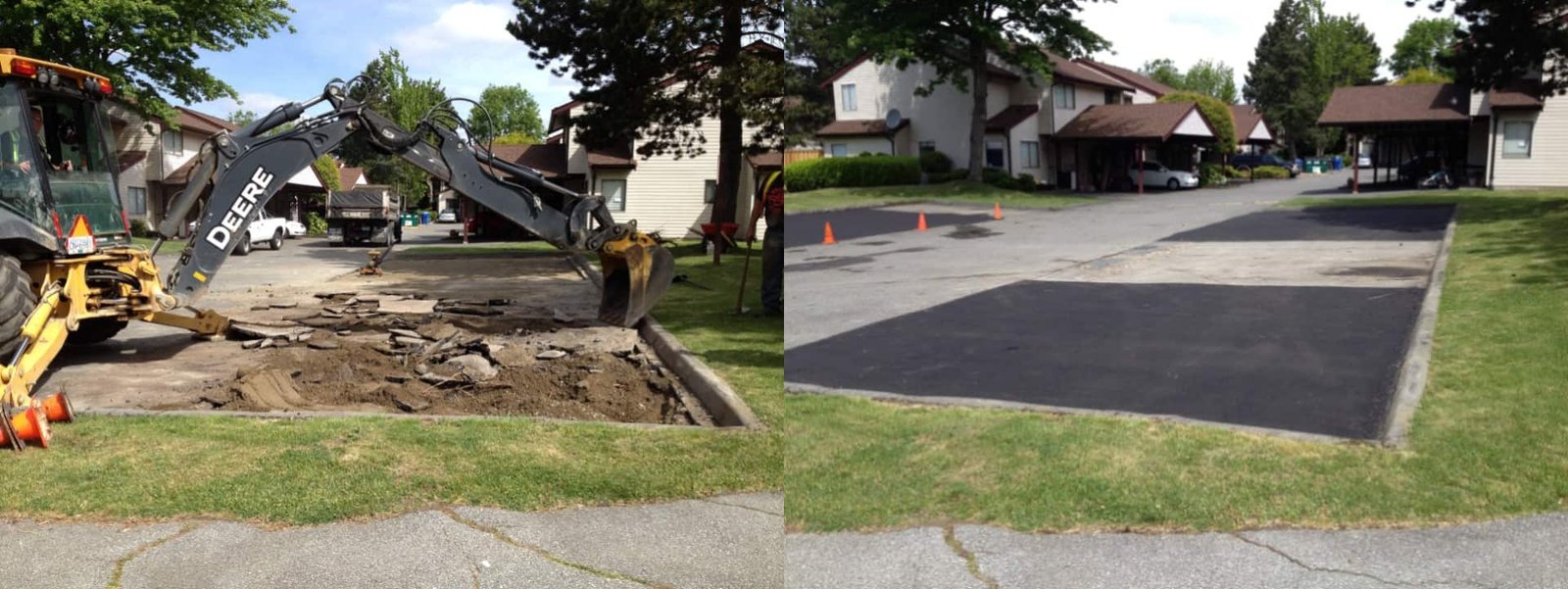
Full-depth patching usually includes saw cutting, removal, base rebuild, compaction, and a new asphalt lift. It costs more, but it is often the right answer when you see repeated potholes in the same wheel path, pumping water, or soft spots.
Mill and fill or overlay: when deterioration is widespread
If the surface is aging everywhere, isolated patches can turn into a “patchwork quilt” that still looks worn and drains poorly. Milling and resurfacing can restore the wearing course more uniformly. It also sets you up for clean restriping and better customer perception.
| What you see | Likely cause | Most cost-effective direction | Why it saves money |
|---|---|---|---|
| Few cracks, no potholes, mostly sound surface | Early aging and water entry paths | Crack sealing + targeted spot repairs | Prevents water damage before base failure starts |
| Isolated potholes, edges still stable | Localized failure (often at drains or turning lanes) | Infrared or hot mix patching with proper prep | Durable fix without paying for large resurfacing |
| Potholes repeat in same spots, soft feel underfoot | Base failure or drainage saturation | Full-depth patches + drainage correction | Stops repeat mobilization and recurring failures |
| Widespread cracking and raveling across most of lot | Surface near end of life | Overlay or mill and fill + restriping | Resets the wearing course and improves function and appearance |
| Edges crumbling, asphalt breaking away near curbs | Unsupported edges, turning stress, water washout | Edge reconstruction + sealing + drainage review | Protects the perimeter, which is where deterioration accelerates |
Not sure if you need patching or resurfacing?
We can walk the site and recommend the lowest-cost path that still protects liability, drainage, and long-term pavement life.
- Clear scope: where to patch, where to seal cracks, and where to rebuild edges
- Optional bundling: striping, drain cleaning, sweeping, and curb touch-ups
How to scope your repair before you request quotes (15 to 20 minutes)
You do not need to be an asphalt expert to collect the information that makes quotes accurate. The goal is to document where the failures are, how severe they are, and what is causing them. That lets contractors recommend a method that actually lasts.
Step 1: Map the damage by “zone,” not by random spots
- Entrances and exits: braking and turning loads are higher.
- Wheel paths: where vehicles track repeatedly.
- Loading and garbage areas: heavier point loads and spills.
- Drainage low spots: ponding areas or near catch basins.
- Perimeters: edges and curb interfaces where asphalt is unsupported.
Step 2: Sort issues into three buckets
- Cracks: single line cracks vs interconnected cracking.
- Potholes and depressions: measure rough diameter and depth.
- Edges and curbs: crumbling, broken curb faces, trip edges.
Step 3: Note water behavior after rain
Vancouver rain exposes drainage problems quickly. After rainfall, note where water sits longer than a few hours. Ponding often signals grading issues or blocked drains, and those conditions can shorten the life of any patch.
Step 4: Capture access constraints
- Can you close stalls, or must the lot remain open?
- Are there delivery windows that cannot be blocked?
- Is there height restriction (parkade clearance)?
- Are there schools, clinics, or high pedestrian volumes on site?
Step 5: Decide your goal for the next 12 to 36 months
A “keep it safe this winter” plan is different from a “reset the lot for the next 5 years” plan. If you share your planning horizon with contractors, you usually get better recommendations and fewer surprise change orders.
Edge and curb repairs: the hidden budget item that saves your lot
Many Vancouver lots fail at the edges first. Once an edge breaks, water infiltrates, the base washes out, and failures migrate inward. Edge work can look “optional,” but it often determines whether your patching program works.
Common edge failures that increase costs later
- Crumbling perimeters: unsupported asphalt breaks under turning traffic.
- Wheel rutting near curbs: repeated turning and braking stress.
- Soft shoulders: landscaping or gravel adjacent zones let water sit and seep under asphalt.
- Broken curbs: vehicle impacts create trip hazards and drainage issues.
If you want a deeper overview of why edges matter and how repairs are typically performed, see the importance of proper parking lot edge repair.
How to reduce total cost by bundling the right services
Most commercial sites win on total cost when they bundle repairs with the items that restore function and protect the investment. This is especially true when closures, staging, and traffic routing are required.
High-value bundles property managers use
- Repairs + crack sealing: patch the failures, then seal the pathways that would create the next round of potholes.
- Repairs + line painting: restore stalls, arrows, crosswalks, and accessible markings after the asphalt work is complete using professional line painting.
- Repairs + drainage maintenance: clean and service drains with catch basin service or hydro jetting when ponding and blockages are contributing factors.
- Repairs + cleaning: sweeping and washing can improve adhesion and leave a “first impression” finish. Explore parking lot cleaning and pressure washing for high-visibility properties.
Bundling also helps tenants and customers because the site returns to a complete, legible layout faster. For striping upkeep planning, see maintenance tips for parking lot striping and lines.
Vancouver-specific cost factors you should plan for
Metro Vancouver sites share a few practical realities that affect both cost and scheduling. Planning for these items early helps you avoid delays and change orders.
Rain, drainage, and freeze-thaw cycles
Water intrusion accelerates cracking and potholes. If you patch without fixing ponding or blocked drainage, the lot keeps failing. If you are seeing unevenness or low spots, consider reading the hidden dangers of an unleveled parking lot to understand how grade issues compound costs.
Traffic volumes and safe work zones
Busy access points, mixed pedestrian traffic, and tight delivery schedules often require phased closures and traffic control measures. In BC, traffic control requirements are governed under WorkSafeBC and related OHS regulation parts for traffic control planning and implementation. If your work impacts public streets or lanes, City-level traffic management requirements may also apply.
Right-of-way interfaces and permits
If your repair touches sidewalks, curbs, or any part of the public right-of-way, you may need permit coverage and restoration standards. Review the City of Vancouver guidance on construction street use permits and traffic management expectations at traffic management for construction and special events.
What a good commercial asphalt repair quote includes
A good quote makes scope visible. It should clearly separate repair types, quantities, assumptions, and what is excluded. If you are comparing vendors, use this checklist to normalize bids.
Scope clarity
- Repair method per zone (crack sealing, infrared, full-depth patch, edge rebuild, milling, overlay)
- Quantities (square footage/metres, number of potholes, linear edge length)
- Depth assumptions for patches and base rebuild
- Prep steps (sawcutting, removal, cleaning, tack coat, compaction)
Operations and risk controls
- Traffic routing plan and any staffing requirements
- Staging and closure plan (phasing for busy lots)
- Schedule window and weather assumptions
- Cleanup and disposal handling
Finish work
- Edge sealing and tie-ins
- Line painting scope if included
- Any drainage maintenance or corrections included
If you want a method-by-method comparison for potholes, see pothole repair methods compared.
What property managers ask us (common concerns)
“Will repairs disrupt tenants or customers?”
Good planning minimizes disruption. The most common approach is phased work, doing entrances last, and timing noisy or high-traffic tasks off-peak. If your site is 24/7, after-hours scheduling can help, but it can also change cost due to staffing and logistics.
“How do we prevent potholes from coming back?”
The durable path is a maintenance program: crack sealing before failures, prompt repairs in wheel paths, and drainage upkeep. For a preventative overview, start with preventing potholes in parking areas.
“Is it better to fix potholes now or wait and resurface later?”
Waiting often increases liability and expands the failure zone. A targeted “stabilize now” patching plan can be the bridge to a future overlay. If potholes are present, address them. Then decide if resurfacing belongs in next year’s capital plan.
“Do we need to repaint lines after asphalt repair?”
Often yes, at least in the repaired zones. Striping restores traffic flow, safety, and accessibility clarity. Many sites bundle it so closures happen once.
FAQ: asphalt repair cost in Vancouver
What is the cheapest way to fix potholes in a parking lot?
Cold patch can be the lowest initial cost, but it is often a short-term safety fix. If the base is stable, hot mix or infrared can last longer and reduce repeat repairs. If potholes keep returning, a full-depth patch usually provides better long-term value.
How do I know if I need full-depth patching?
Signs include potholes reappearing in the same location, soft spots, pumping water, or depressions that grow after rain. Full-depth work addresses the base, not just the surface.
Do crack sealing and patching belong in the same project?
Often yes. Patching fixes existing failures, while crack sealing blocks water entry that would create the next failures. Bundling can improve value by reducing repeat mobilization.
Why do two quotes for the same area differ so much?
Differences are usually in prep quality, depth assumptions, traffic control planning, and whether drainage or edge stabilization is included. Ask each contractor to list assumptions.
Will repairs hold up in Vancouver rain?
They can, if work is scheduled in suitable weather windows and includes proper drying, cleaning, tack coat, compaction, and edge sealing. If drainage is poor, fix the water problem or repairs can fail early.
When do I need permits for asphalt repair?
If work impacts the public right-of-way (sidewalks, lanes, curbs on City property), permit requirements may apply. Review City of Vancouver guidance for street use and traffic management planning.
Should we repaint lines before or after asphalt repair?
After. Repairs change the surface, and new paint bonds best to a clean, cured surface. Re-striping after repairs restores safety, flow, and accessible markings.
What is the fastest way to get an accurate quote?
Share photos, a simple map of damage zones, notes on ponding, and any access constraints (closures, delivery windows, height restrictions). Then schedule a site walk so depth and base conditions can be confirmed.
Ready to fix potholes, cracks, and edges before they become a bigger project?
City Wide supports commercial and industrial properties across Greater Vancouver, including Vancouver, Burnaby, New Westminster, Surrey, White Rock, Langley, Coquitlam, Richmond, Delta, Maple Ridge, and Abbotsford.
- Facility types: strata condos, apartments, retail plazas, office buildings, warehouses, hotels, clinics, municipal sites
- Common scopes: pothole patching, crack sealing, edge repair, curb interface fixes, striping restore, drainage support
Related guides (if you are building a maintenance plan)
- Why hiring professionals for pothole repairs reduces long-term costs
- Preventing potholes in parking areas: safety and savings
- Parking lot edge repair: why perimeter failures spread fast
- Preventative crack sealing: extending asphalt life
For service scheduling, visit City Wide services or start with blacktop (asphalt) repair.
External references
For official local guidance related to right-of-way work and traffic management, see: City of Vancouver construction street use permits and traffic management for construction and special events. For worker traffic control requirements in BC, see WorkSafeBC and BC OHS Regulation traffic control provisions.